Gladiators

Honor, Sangre y Espectáculo en Roma
Gladiatorial combat was one of the most representative and brutal spectacles of Ancient Rome. Its origin goes back to Etruscan funerary rituals of the 6th century BC, where blood was offered in honor of the dead. This practice was integrated into Rome around the 3rd century BC, transforming into a public ritual of power, punishment, and mass entertainment.
Origins and status of gladiators
Gladiators were professional fighters trained to battle in amphitheaters. Most were slaves, prisoners of war, or convicts. But there were also free men who, motivated by fame, money, or redemption, voluntarily chose to become gladiators, at the cost of losing their civil rights for as long as their service lasted.
Before their first combat, each gladiator had to take an oath:
"To accept being whipped, burned, and stabbed, if fate so demanded."
Schools and training of gladiators in Rome
Given the diversity of combat styles, specific rules were established to regulate gladiatorial training. This instruction was the responsibility of the lanistae, former fighters turned trainers.
There were state-owned gladiators who fought under a special regime and received a salary. Others were trained by private lanistae, who recruited young men and later rented them out for funerals, banquets, and other ceremonies.
There were also wealthy citizens who owned gladiators, although the best-trained usually served the emperor. The lanistae acted as teachers and agents, renting or selling their fighters. The schools were spread across different points of the Empire and formed a well-structured network at the service of the spectacle.
The Doctore: absolute authority of the ludus
The doctore was a retired gladiator, an expert in combat, responsible for training new fighters. His experience was reflected in his authority and in the harshness of his teaching. He instructed not only in technique but also in strategy, control, and discipline. He trained with a rod to correct mistakes instantly. Every fallen student hardened him further, but if one triumphed in the arena, the doctore knew he had forged him. Within the ludus even champions showed him respect. He answered only to the lanista.
Gladiators of Rome: structures, styles, and hierarchies
Not all gladiators fought in the same way. Some embodied strength, others speed. Each type had its own style, armament, and combat technique. Through these categories their matchups, weapons, and role within the spectacle were defined.
Rewards, fame, and freedom
The combats could be organized by the State, by wealthy citizens, or by the lanista himself, and they were held at funerals, festivals, or public spectacles.
The victor received palms and crowns as a symbol of triumph. He could also obtain money, jewels, or gifts from the public or the organizer (editor).
The greatest reward was the rudis, a wooden sword that symbolized freedom. Receiving it made the gladiator a free man, although many chose to continue fighting for gold or prestige.
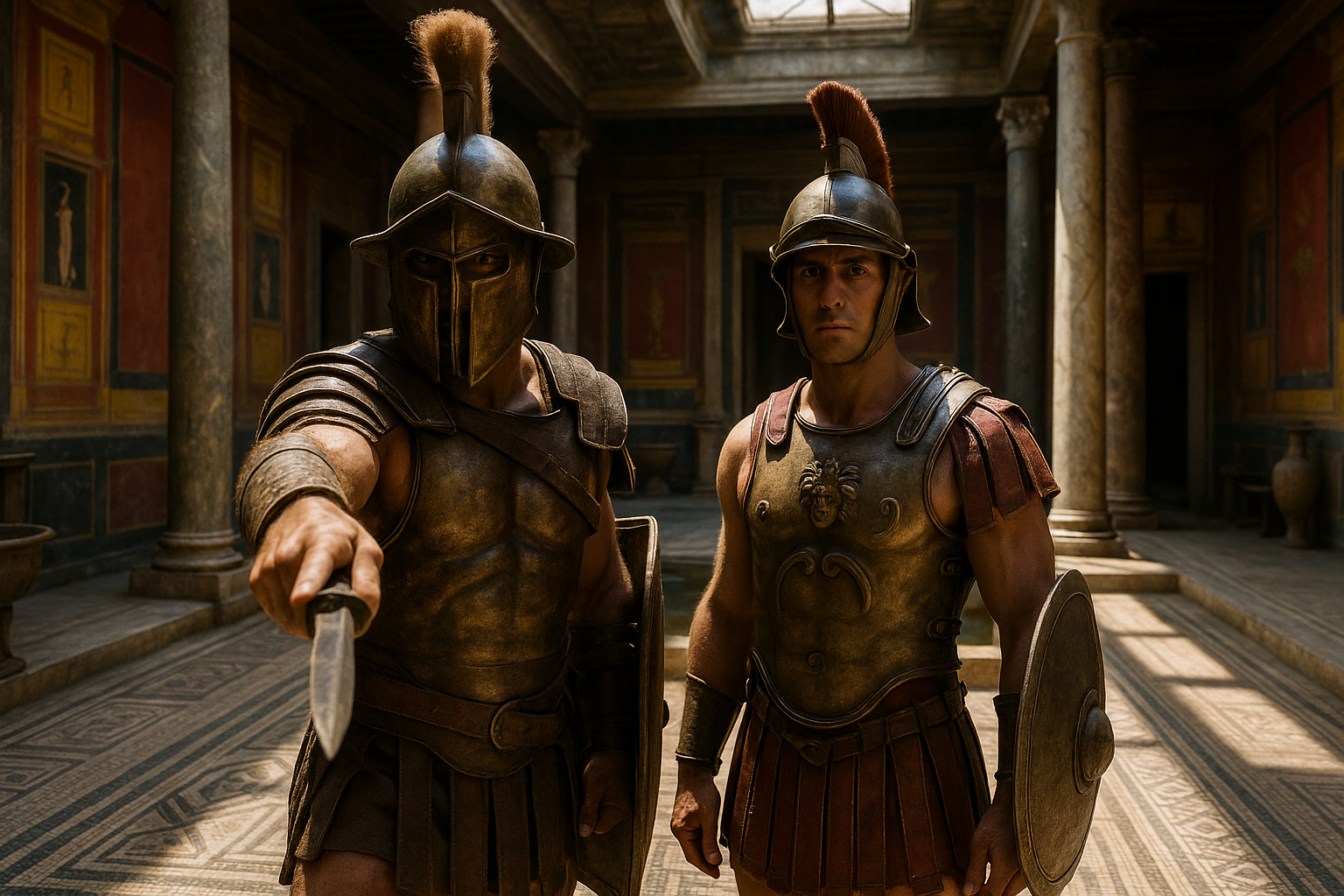
Octavia
Chapter 23
…—Are you in a hurry to die?” asked a deep, hoarse voice behind him.
It was Kromax, clad in his Myrmidon armor; Titus, to his left, wore that of a Samnite. Both panoplies were very similar…
Did you know…?
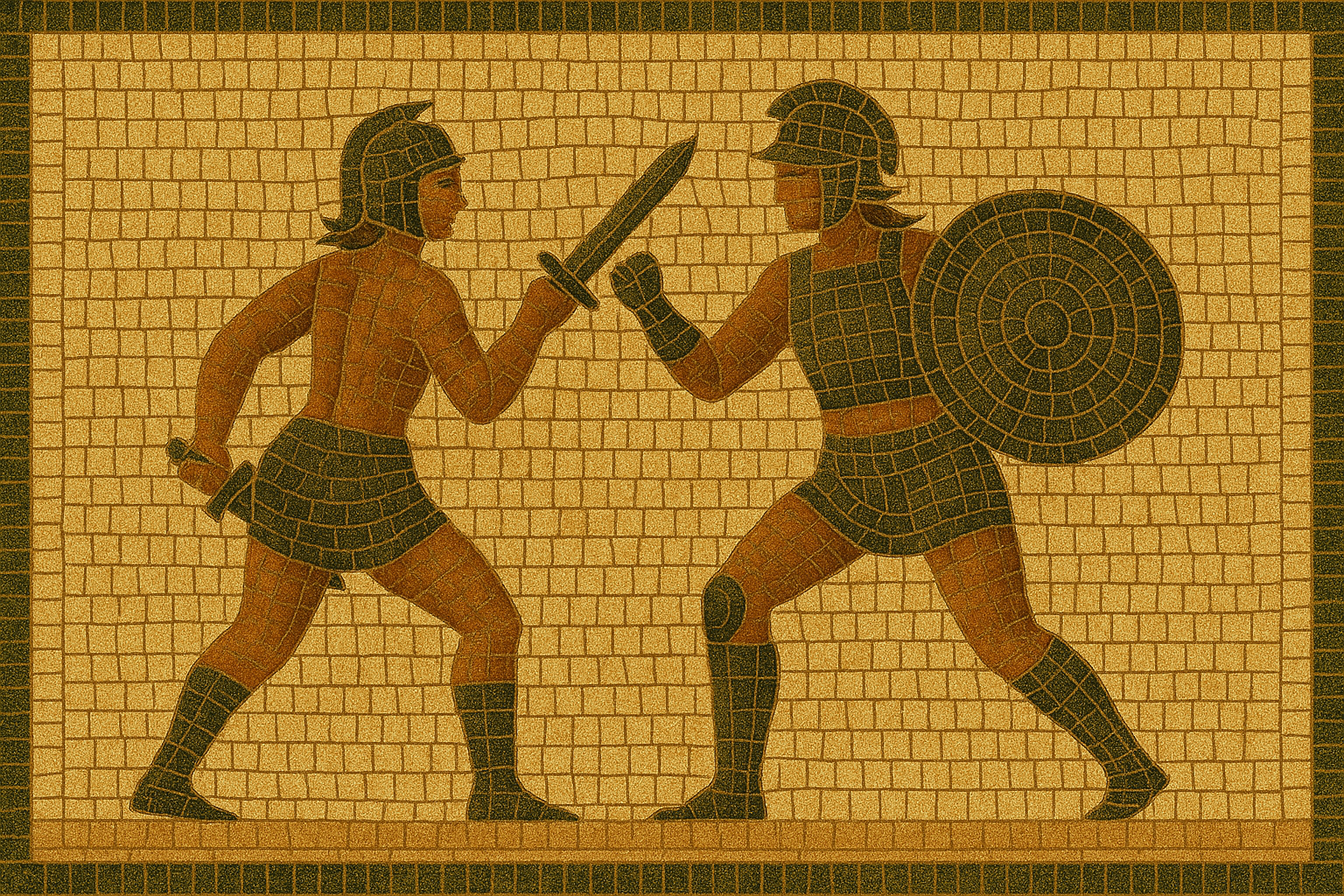
🔹 Female gladiators also existed. Though they were very few, the gladiatrices fought in the arena like men, with helmets, weapons, and similar styles.
🔹 They were considered a luxury rarity and an exotic spectacle. Some fought before the emperor or in private celebrations organized by nobles.
🔹 An inscription found in Halicarnassus (present-day Turkey) mentions two famous gladiatrices: Amazona and Achillia, who fought “bravely like men.”
🔹 They often fought against each other, but also against beasts or in mythological reenactments. In some mosaics, they are depicted bare-chested, which heightened the theatricality of their combats.
🔹 In 200 AD, Emperor Septimius Severus officially banned gladiatrix combats, considering them immoral. But their legacy was carved in stone… and in history.
Samnite: the enemy turned into a symbol
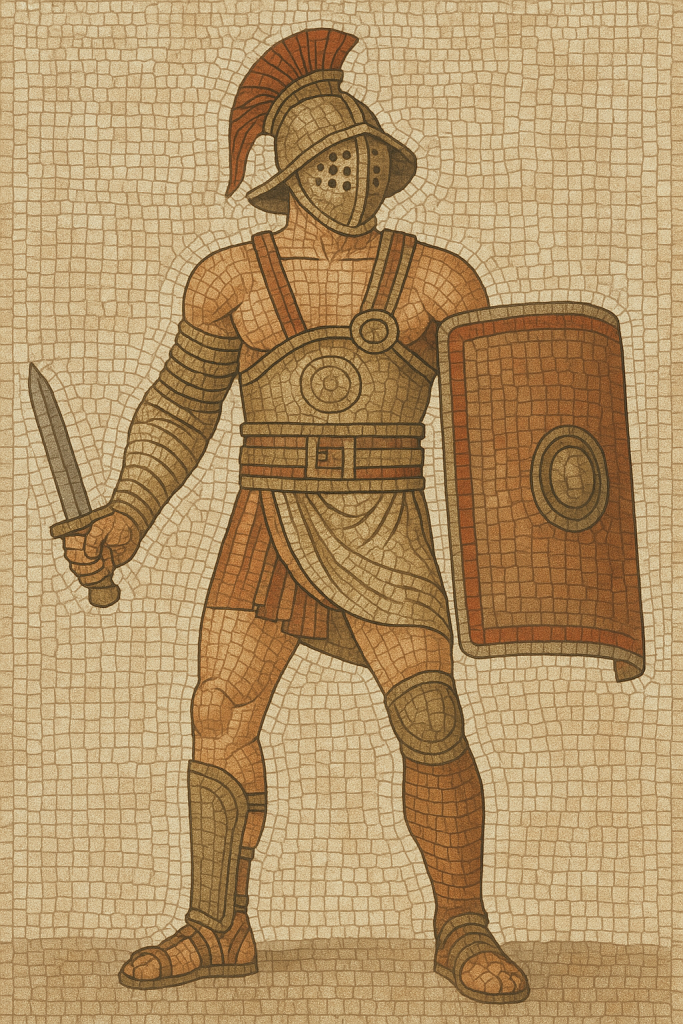
The Samnite was one of the first types of gladiators to appear in Rome. His name comes from the Samnite people, an ancient enemy of the Romans whose defeat was turned into a form of spectacle.
He was equipped with a large oblong shield, a helmet with a tall crest, and metal greaves. His figure stood out for his heavy armament and imposing presence.
Initially he symbolized the submission of the defeated foreigner. However, over time the Samnite came to represent a classic style of combat: solid, balanced, and respected for its effectiveness.
His style conveyed strength and discipline, a reflection of a martial tradition firmly established within Roman culture.
Murmillo: the wall with a sword
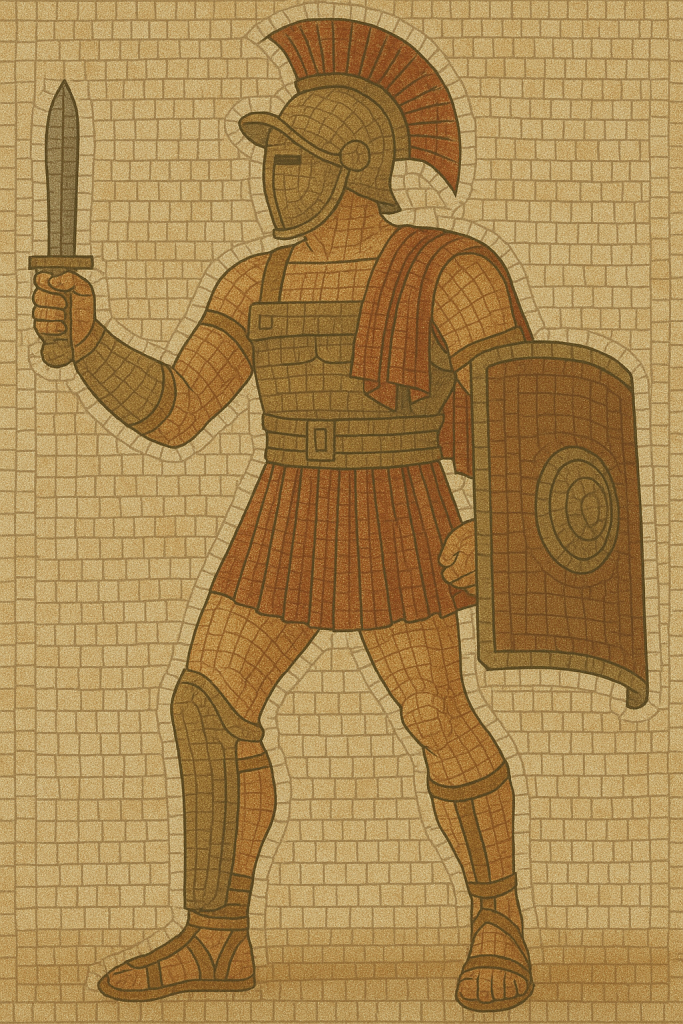
The murmillo was a heavily armed gladiator, recognizable by his curved shield that covered almost his entire body and a closed helmet with a large fish-shaped crest that reinforced his imposing appearance.
He wore a greave on his left leg and a bronze guard on his right arm, the only one free to strike. His strength lay in the solidity of his defense and the power of his blows.
Inspired by the Roman legionary, he represented in the arena the military might of the Empire. His attacks with the gladius were direct and destructive, designed to dominate his opponent with precision and strength.
He usually fought against more agile opponents such as the Thracian or the retiarius. Unlike them, the murmillo sought control and tactical superiority.
Dietrich is shown fighting with this panoply, soon discovering that its weight could be as limiting as it was protective. (In the literary passage the term “Myrmidon” is used, although it actually corresponds to the gladiator historically known as murmillo.)
Tetraites: the champion of Pompeii
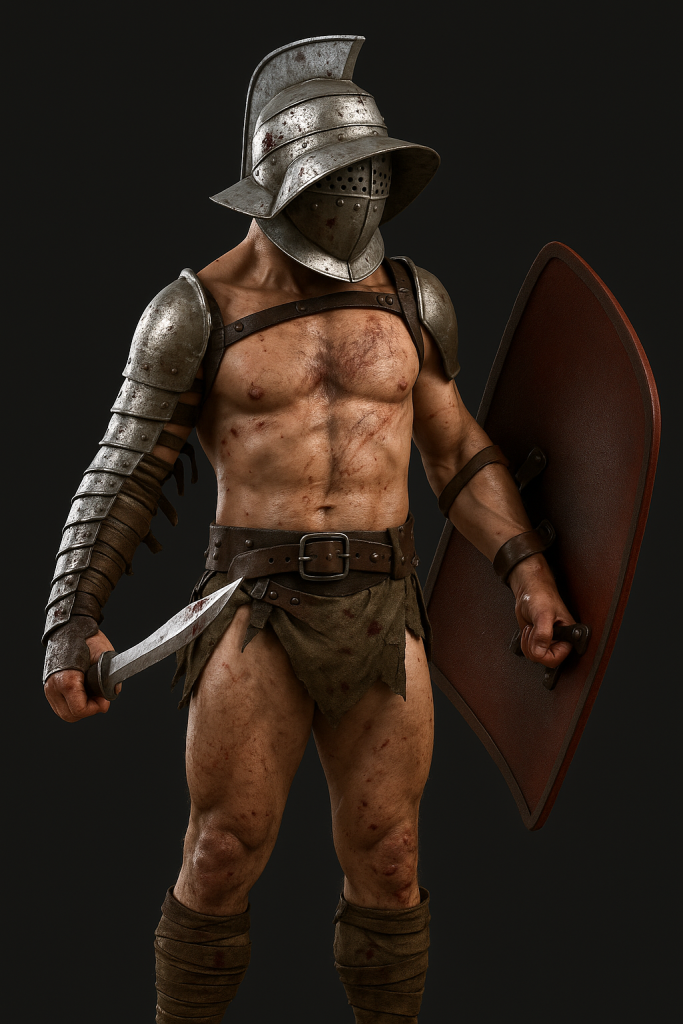
Tetraites was a real gladiator, discovered through graffiti in Pompeii in 1817. His name appears alongside that of Prudes, whom he defeated in combat, and both are depicted on vessels found in France, England, and Hungary, which demonstrates his fame spread throughout the Empire.
Tetraites fought in the murmillo style:
- Bare torso
- Rectangular shield
- Short sword
- Visored helmet
- Arm and leg protectors
His figure was immortalized by a wall painting near the site of his most famous combat. Although the exact dates of his birth and death are unknown, he is believed to have lived just before the eruption of Vesuvius in 79 AD.
Thracian: the one who strikes from the shadows
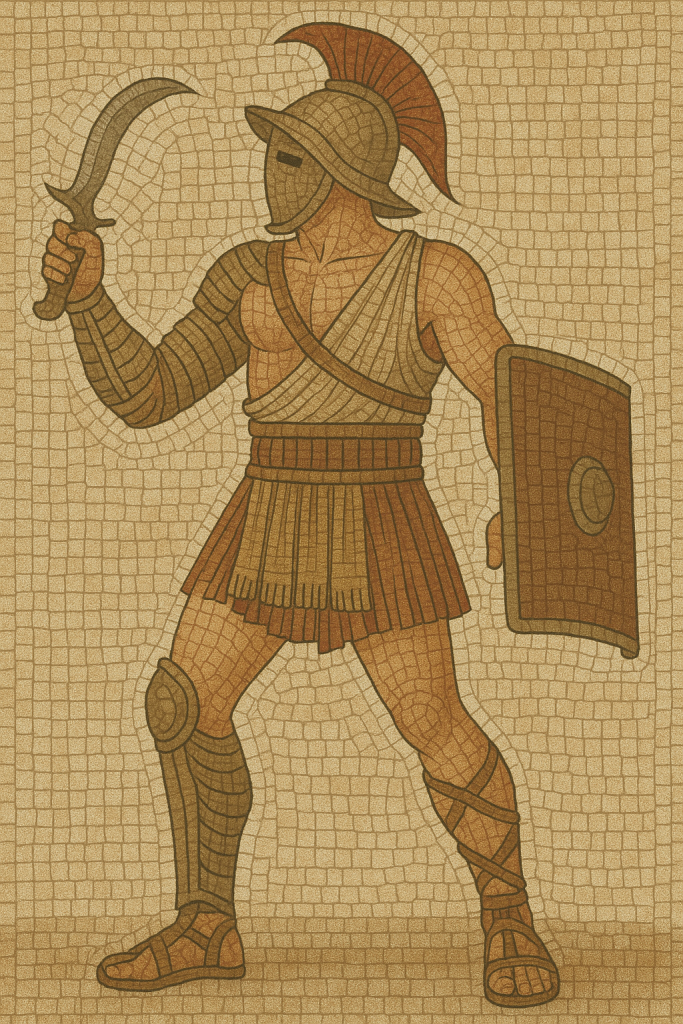
The Thracian was a light, agile gladiator specialized in lateral combat. He wielded a sica, a curved sword designed to bypass the opponent’s defense and reach unprotected areas.
His small shield gave him greater freedom of movement. The tall helmet decorated with a crest in the shape of an animal often included a side plume that alluded to his speed and danger.
His strategy avoided frontal confrontation. He attacked from the angles, seeking open flanks and weak points.
He often fought against heavier gladiators such as the murmillos. The Thracian relied on mobility and precision, trusting his ability to exploit any lapse from his opponent.
Retiarius: speed, skill, and risk
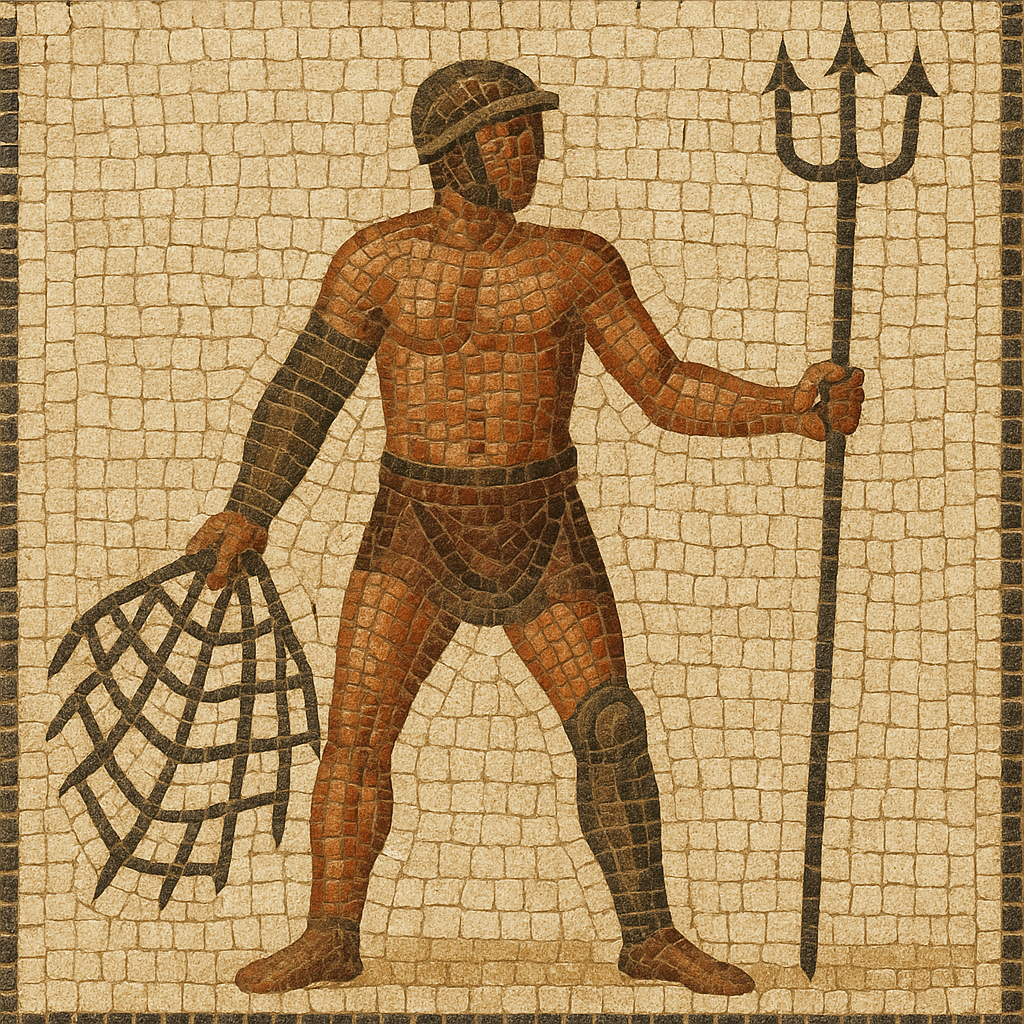
The retiarius fought without helmet, shield, or armor. His nearly naked body relied entirely on agility and distance as his only form of defense.
His weaponry was unique: a net in one hand, a trident in the other, and a dagger on his belt as a last resort. He watched, stalked, and calculated the exact moment to cast the net, aiming to entangle or unbalance his opponent. If successful, he immediately struck with the trident, targeting unprotected areas.
He was the only gladiator who fought with air and rope. He represented cunning, risk, and strategy without protection. Each fight was a test of precision: a single hit could bring victory in seconds; one mistake left him exposed with no margin for error.
He usually fought against the secutor, his antithesis: armed, armored, and with limited vision. A duel between the heaviness of iron and the lightness of instinct.
Hoplomachus: tactical combat
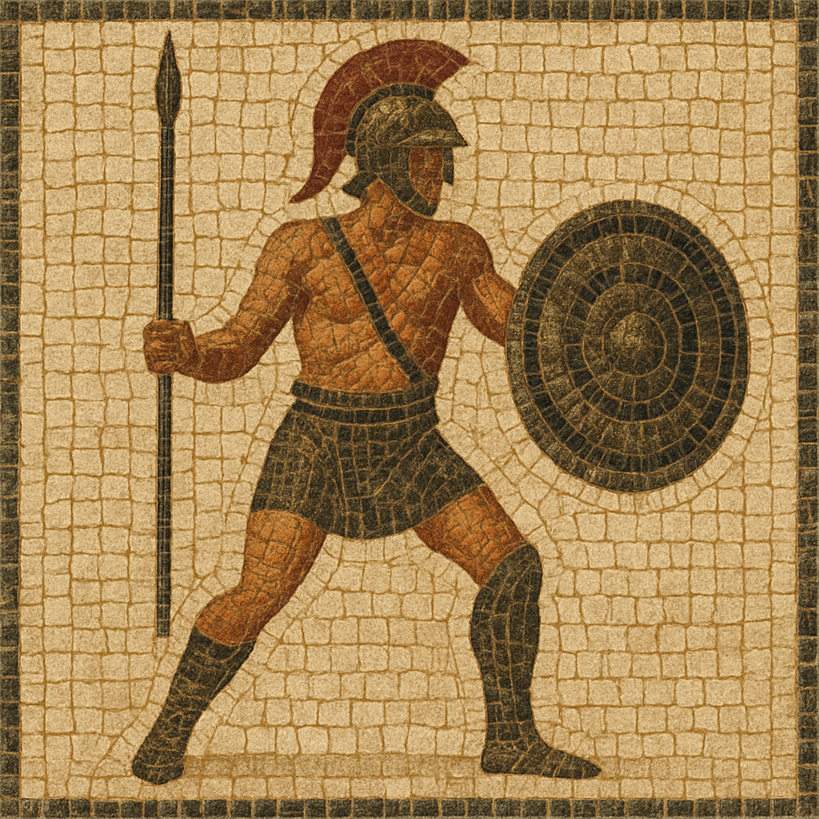
The hoplomachus was inspired by the ancient Greek hoplites. He was armed with a short spear, a round shield, and a closed crested helmet. His fighting style was marked by firm steps and disciplined movements, as if marching in formation.
He observed, assessed, and controlled the rhythm of the fight. His guard was high, his defense compact, and his attacks precise. In the arena he showed a restrained attitude, focused exclusively on the duel without being influenced by the surroundings or the crowd.
His effectiveness was evident, even if he did not stand out for spectacle. When he attacked, he drove the spear with determination, aiming for the exact point to destabilize or neutralize his adversary. His presence evoked the Hellenic military tradition and the tactical order that defined the Greek armies.
Provocator: the one who sets the tone
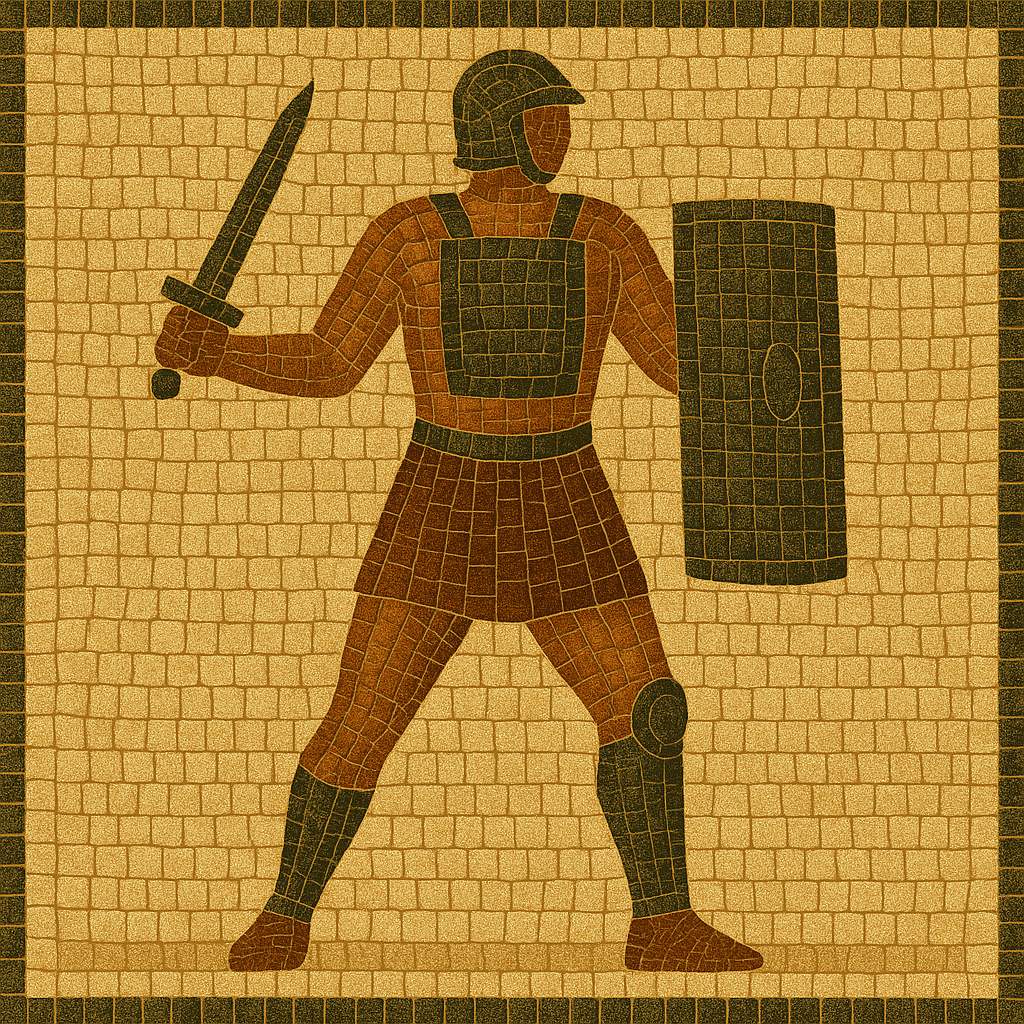
The provocator was the first to enter combat. His appearance opened the day, began the spectacle, and set the tone. His equipment was functional and straightforward: closed helmet, rectangular shield, short gladius, and a chest plate called cardiophylax, distinctive of his category.
He represented the frontal fighter who battled face-to-face without tricks. His style was sober and forceful.
His fights were intense; clashes full of strength, heavy steps, and decisive blows. If the provocator fell, the crowd understood the day would be bloody. If he won, it made clear that mediocrity had no place in the arena.
Equites: mounted combat
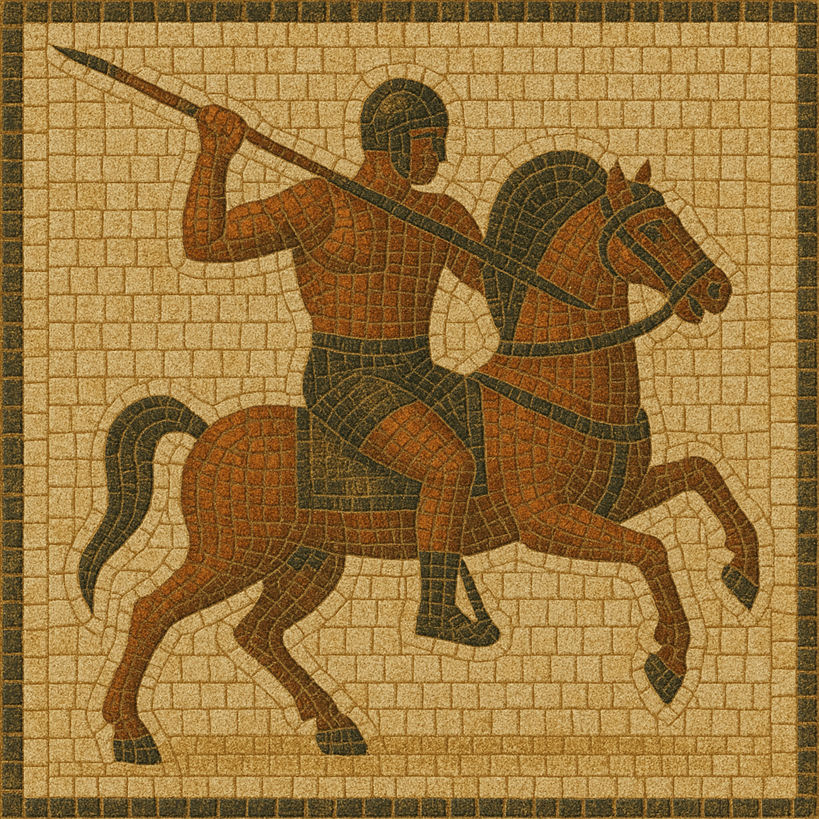 The equites were the only gladiators who fought on horseback. They entered the arena mounted, lance in hand, shield raised, and protected by a closed helmet and light armor. They wore short tunics and kept their torsos covered.
They only fought against each other and never dismounted. Their duels were designed to display skill and control. The fight was quick, fluid, and symbolic, with movements that resembled a ceremonial duel more than a struggle for life.
Their presence inaugurated the day’s events. For those minutes, the arena ceased to be a closed circle and became an open field where two banners measured themselves in speed, skill, and precision.
Dimachaerus: double-edged, without defense
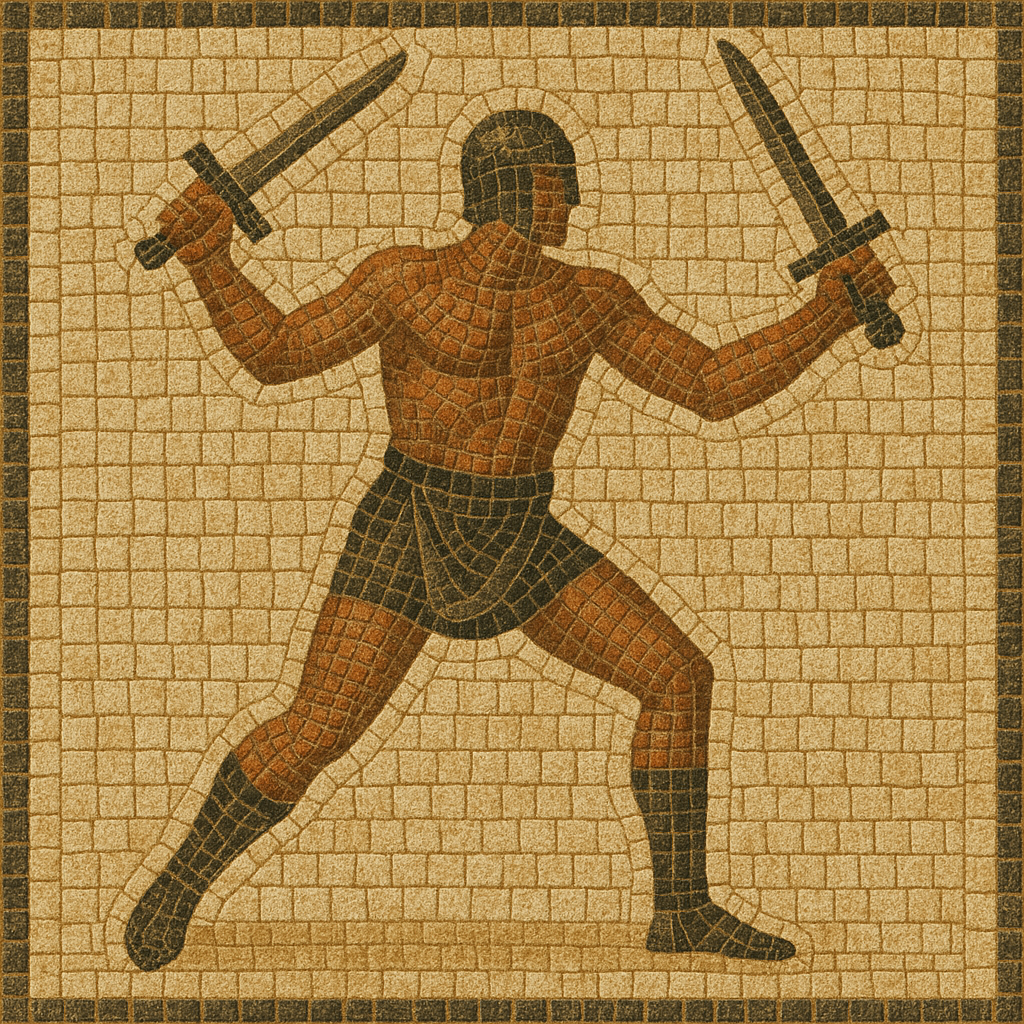
The dimachaerus fought without a shield or additional protection. He wielded a sword in each hand and based his style on constant offense, speed, and unrelenting pressure.
This type of gladiator was rare, but when he appeared, he became the center of the spectacle. His style was unpredictable: he struck from both sides without a fixed pattern, guided by instinct and immediate reaction.
Every mistake was potentially fatal both for him and for his opponent. His fighting demanded absolute reflexes and determination. When he landed a blow, he did so with such speed that his adversary barely had time to respond.
Essedarii: combat on wheels
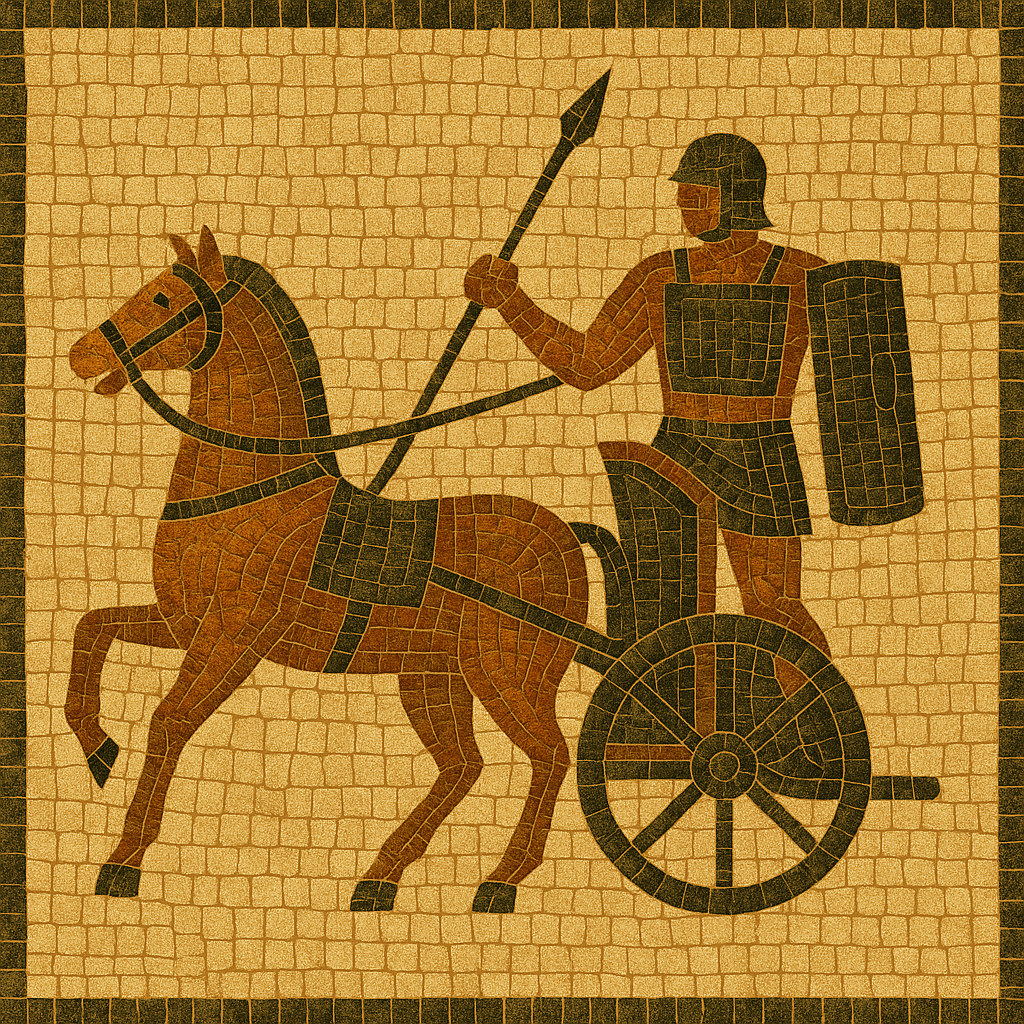
The essedarii were gladiators who fought from light chariots, inspired by the ancient Briton warriors. Their entry into the arena was striking: high-speed turns, war cries, and a strategy based on constant movement.
The chariot itself was a combat tool. While the auriga controlled the horses, the essedarius hurled javelins or struck with a sword from the moving platform.
This form of fighting required balance, coordination, and great precision. Attacking and defending while the ground shifted beneath their feet demanded an exceptional level of skill.
The essedarius stood out for his extreme agility and his ability to master chaos with speed and determination.
Laquearius: the hunter with a lasso
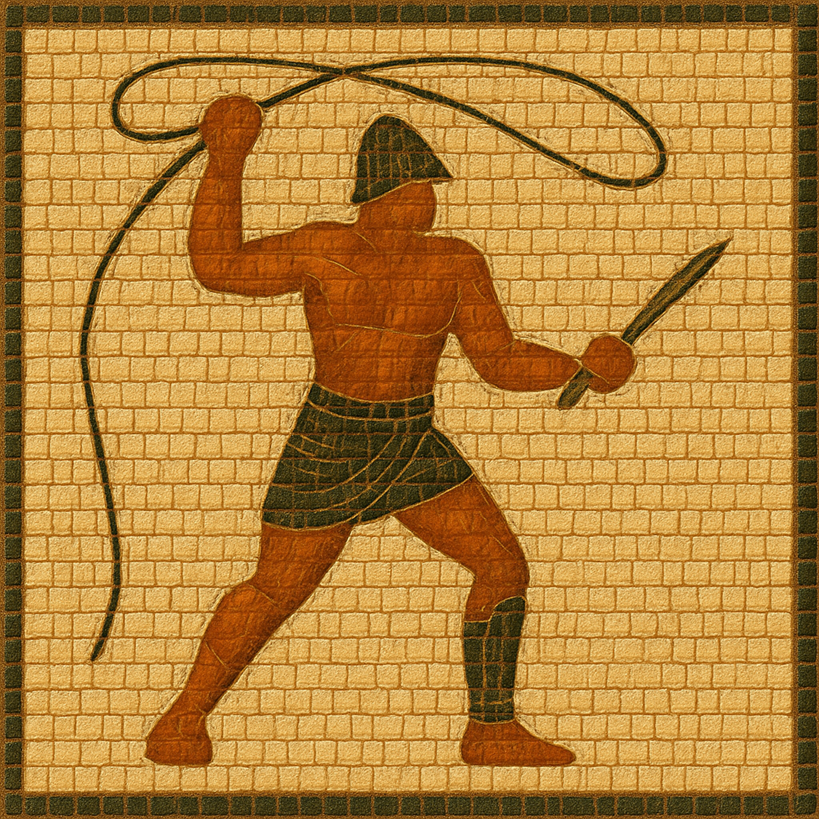
The laquearius was a rare type of gladiator, similar to the retiarius, but instead of a net he used a braided rope with a slipknot designed to entangle and bring down his opponent.
His armament was completed with a dagger or a short staff with which he delivered the finishing blow quickly before the adversary could react.
He fought without shield or helmet, relying entirely on his precision and reflexes. Each attempt to capture was a risk: if he missed, he was completely exposed. But if he succeeded, a single flick of the wrist was enough to end the fight.
Secutor: unstoppable advance
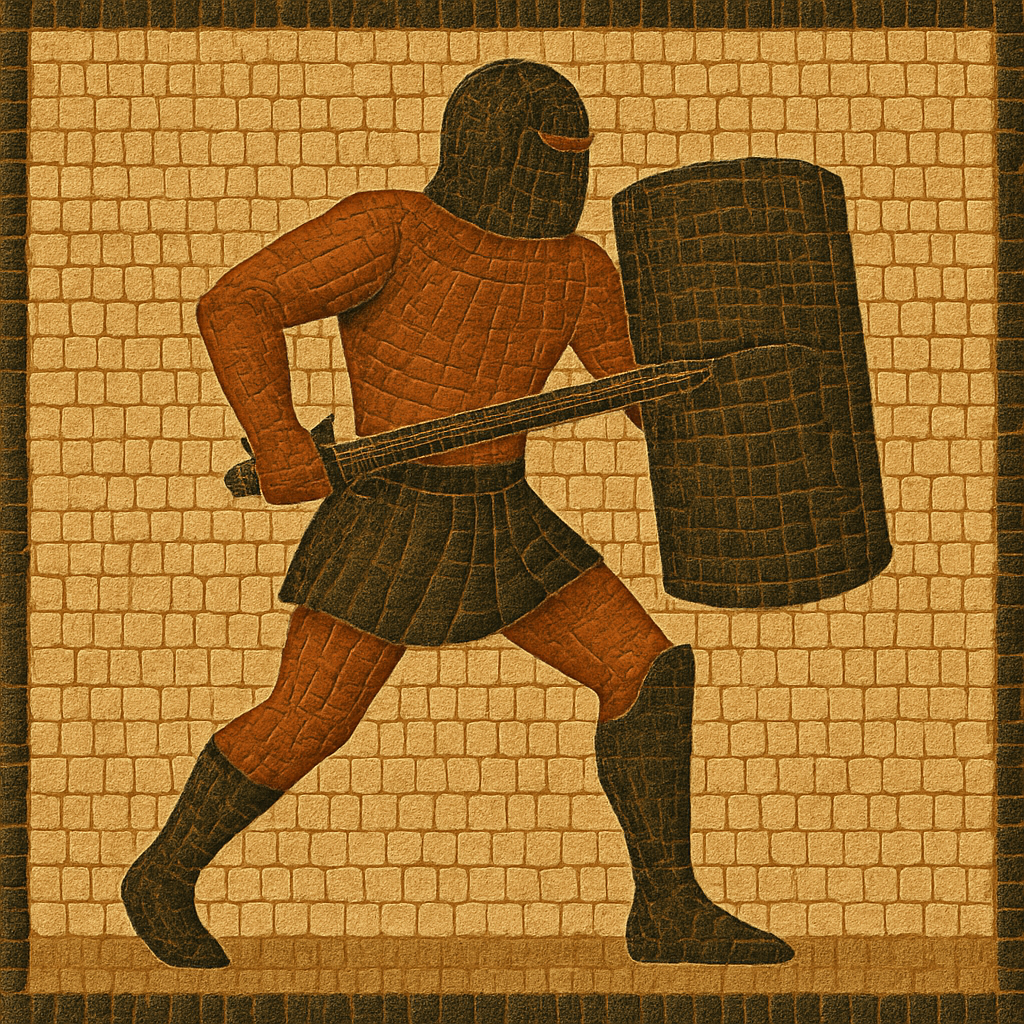
The secutor wore a smooth, rounded helmet with two small openings for vision and breathing. His equipment was completed with a large shield and a short gladius. Every element was designed to endure and to press forward.
He was the habitual opponent of the retiarius. Where the latter was agile and evasive, the secutor imposed weight, strength, and a relentless rhythm. His steps were firm, his guard tight, and his advance constant.
He blocked the net, neutralized the trident, and struck as soon as he detected an opening. He embodied close combat, attrition, and physical dominance.
Arbelas: blade instead of hand
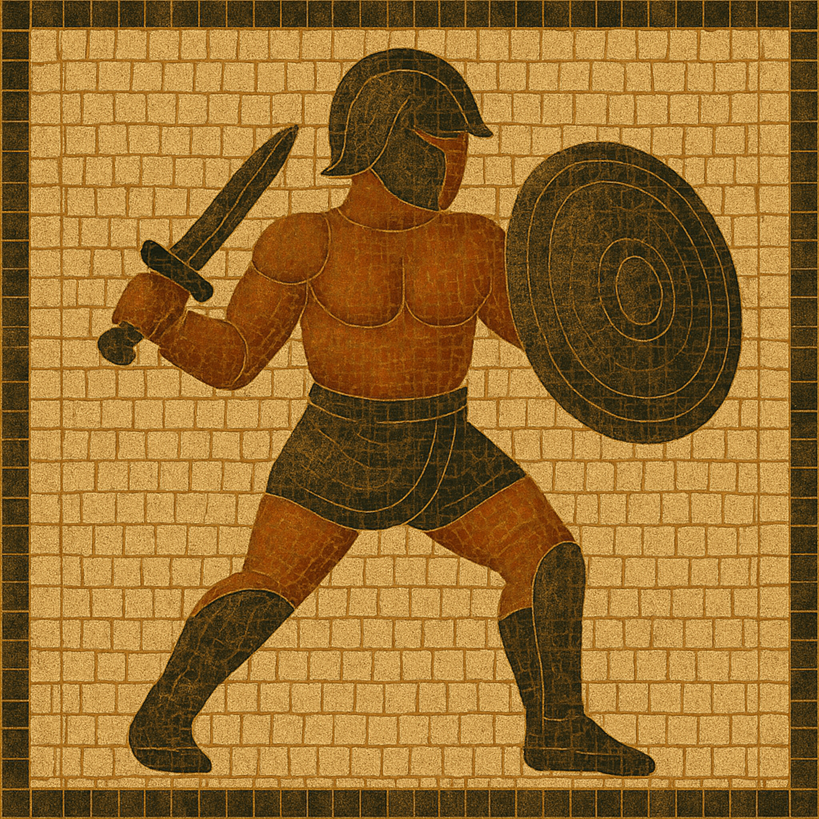
The arbelas is one of the most enigmatic figures of the gladiatorial world. His main weapon was a curved blade, similar to a half-moon, fixed directly to the arm.
In the arena, his presence generated a mix of fascination and fear. Every one of his movements was a constant threat. In combat he spun around to deliver circular cuts, as if he were part of a mechanism.
Some consider him a variant of the scissor; others classify him as an independent type. He stood out for his singular appearance: a fighter with a blade instead of a hand, designed to wound without respite.
Scissor: direct offense
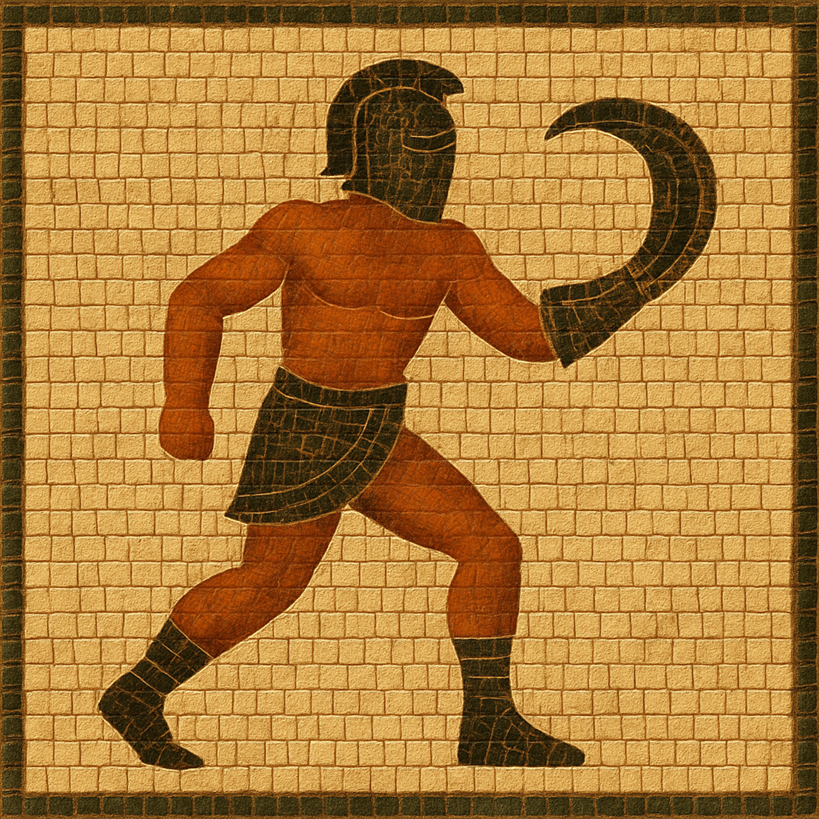
The scissor fought with a curved metal blade fixed to his forearm, designed to slash, push, and destabilize. His style relied on constant offense.
In some cases, he carried a second weapon or an elongated guard in the other hand to deflect attacks. His tactical focus was clear: break through the opponent’s defense with continuous pressure.
Although uncommon, he is depicted in several mosaics with an imposing presence. His fighting style—fast, direct, and forceful—left a lasting impression.
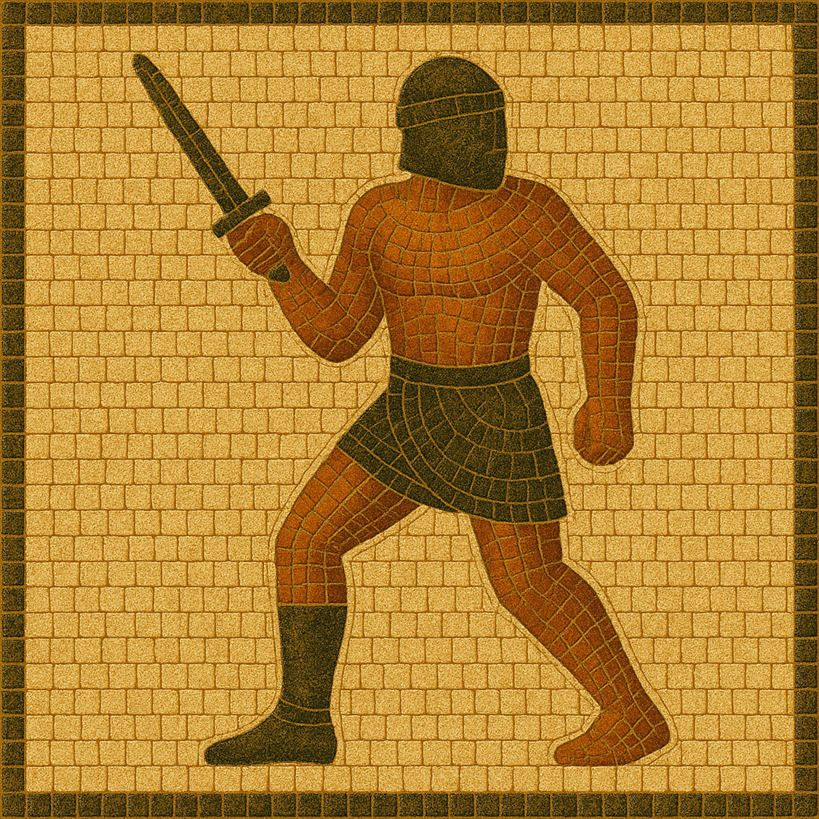
Andabatae: combat without sight
The andabatae fought with their faces completely covered by a helmet without visual openings. They fought blind, guided only by sound and instinct.
Some historians interpret their participation in the arena as a punishment or an extreme form of spectacle, possibly applied to slaves without military training. The lack of visibility increased the risk and turned every action into an uncertain gamble.
Their fights were clumsy, but they drew attention because of their unpredictability. They rarely achieved victory, but when one managed to survive, the crowd reacted with force.

 EN
EN  ES
ES  FR
FR