Luger P08 Parabellum

Precisión mecánica y legado histórico
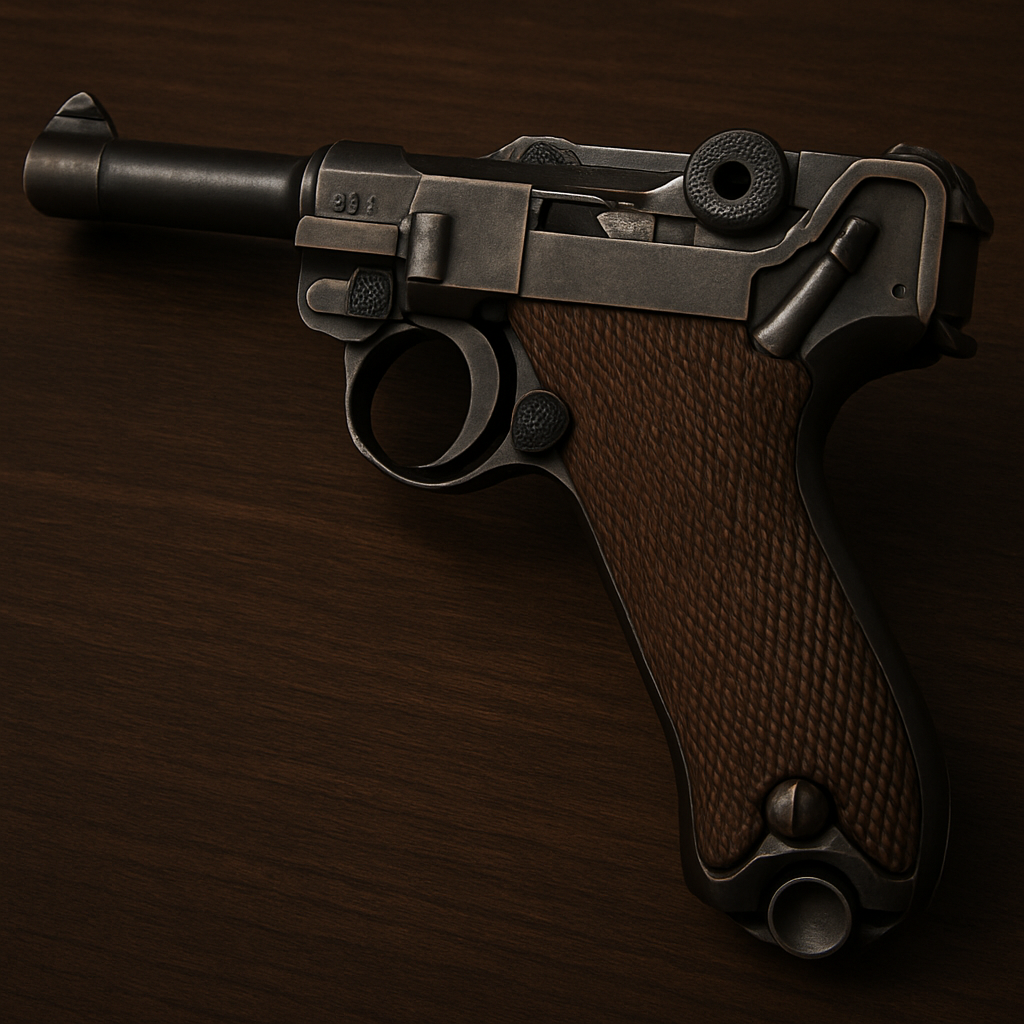
Designed at the end of the 19th century by engineer Georg Luger, the Parabellum pistol —universally known as the Luger P08— was one of the first semi-automatic handguns with international projection. Its system, derived from the Borchardt C-93 model, introduced an innovative toggle-link mechanism that offered a more compact and stable lock. The result was a reliable, well-balanced, and elegant pistol that marked a before and after in weapon design.
Its structure was intended for high-pressure cartridges, such as the 9×19mm Parabellum, a caliber that became the global standard. The toggle recoil system allowed it to eject the casing and reload smoothly in just a fraction of a second. Its operation required powerful ammunition: weaker loads could cause cycle failures, which led to its rejection in experimental automatic versions.
In terms of ergonomics, its 145-degree grip angle stood out, providing a natural hold. This detail was so admired that later manufacturers, such as William B. Ruger, replicated it in contemporary civilian models.
Officially adopted by the German Army in 1908 under the designation Pistole 08 (P08), this weapon accompanied troops in both World Wars. Although its most famous version was chambered in 9mm, the first models were produced in 7.65mm and used by the Swiss army under the designation Ordonnanzpistole 00. It was also employed by Swiss forces, the Imperial German Navy, the Weimar Republic, and even the Volkspolizei in the postwar era. During its service life, it was produced by DWM and later by Mauser Werke, which moved production to Oberndorf in 1930 and kept it in manufacture until 1943.
Despite the arrival of the Walther P38, the Luger continued to be preferred by many officers and members of specialized units, both for its reliability and its symbolic weight. Its refined design, distinctive toggle mechanism, and unique metallic sound when cocked made it an icon recognizable even outside the military sphere.
Over time, the P08 ceased to be merely a regulation weapon and became a sought-after collectible piece for both historians and enthusiasts. Its precision manufacturing, unmistakable silhouette, and role in the imagination of the 20th century have ensured it a place among the most emblematic firearms of modern history.
Fabián Enériz Olague
Chapter 4
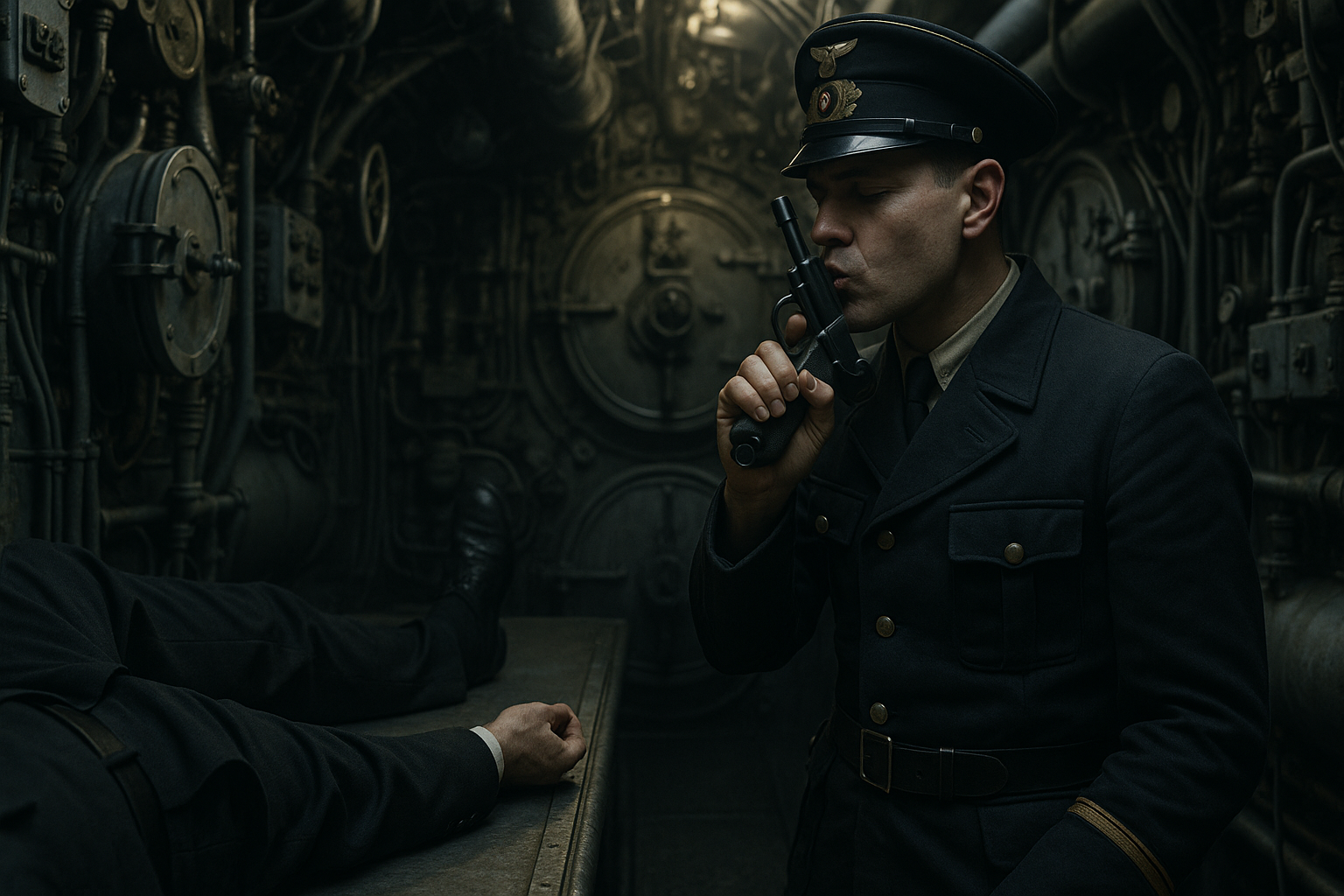
…Two seconds later, Kramer was lying at Klaus’s feet, floating in a worry-free universe.
—Back home, dear Gertrud —whispered the officer, holstering his Luger P08 after kissing the buttstock…
Did you know…?
🔹The name “Luger” was introduced by distributor Hans Tauscher for the U.S. market. The original name, “Parabellum,” comes from the Latin si vis pacem, para bellum (“if you want peace, prepare for war”).
🔹 La Luger P08 fue una de las pocas pistolas semiautomáticas en emplear un mecanismo de articulación en “rodilla”, visible desde el exterior y con un movimiento característico al disparar.
🔹Despite common belief, the expression “08/15” does not refer to this pistol, but rather to the MG 08/15 machine gun, another German standard weapon of World War I.
Curiosities
Some Luger variants featured a magazine safety, a rare characteristic that prevented the gun from firing if the magazine was not inserted, designed for greater safety in training and service. Luxury models were produced with ivory grips, personalized engravings, and nickel or silver finishes, intended for high-ranking officers or as diplomatic gifts.
In the U.S. civilian market, the Luger became so popular after World War I that unofficial replicas soon appeared, produced by small companies for commercial purposes. Many of these versions, manufactured in very limited runs, are today considered rare collectibles. At the same time, on the battlefield, some elite German units incorporated an unusual accessory: holsters with wooden stocks, which when attached to the grip transformed the pistol into an improvised carbine, providing greater stability in sustained fire and close combat.

 EN
EN  ES
ES  FR
FR