Military Uniforms

Diseño, función e identidad
Panzertruppen: Aesthetics and Efficiency in Fabric
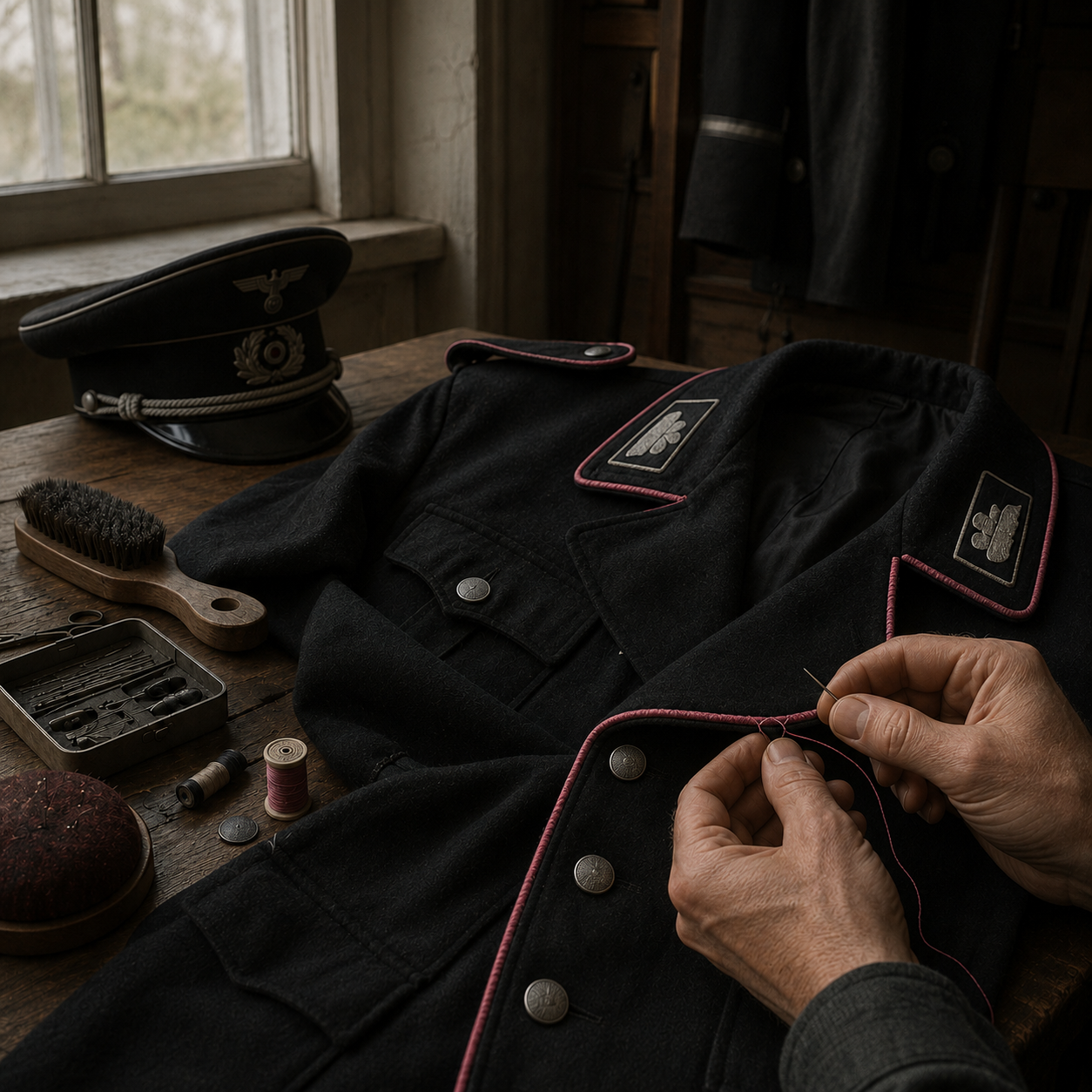
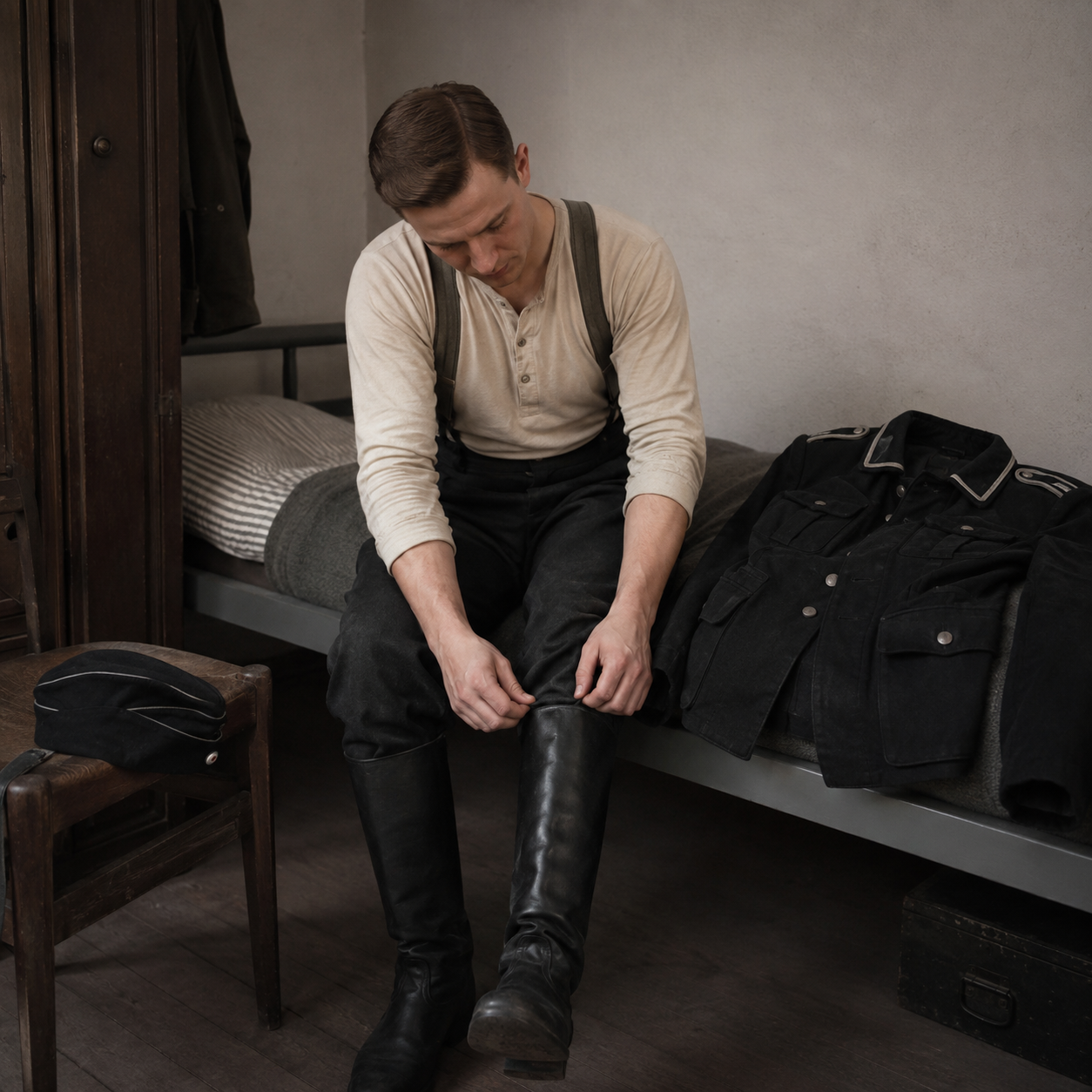
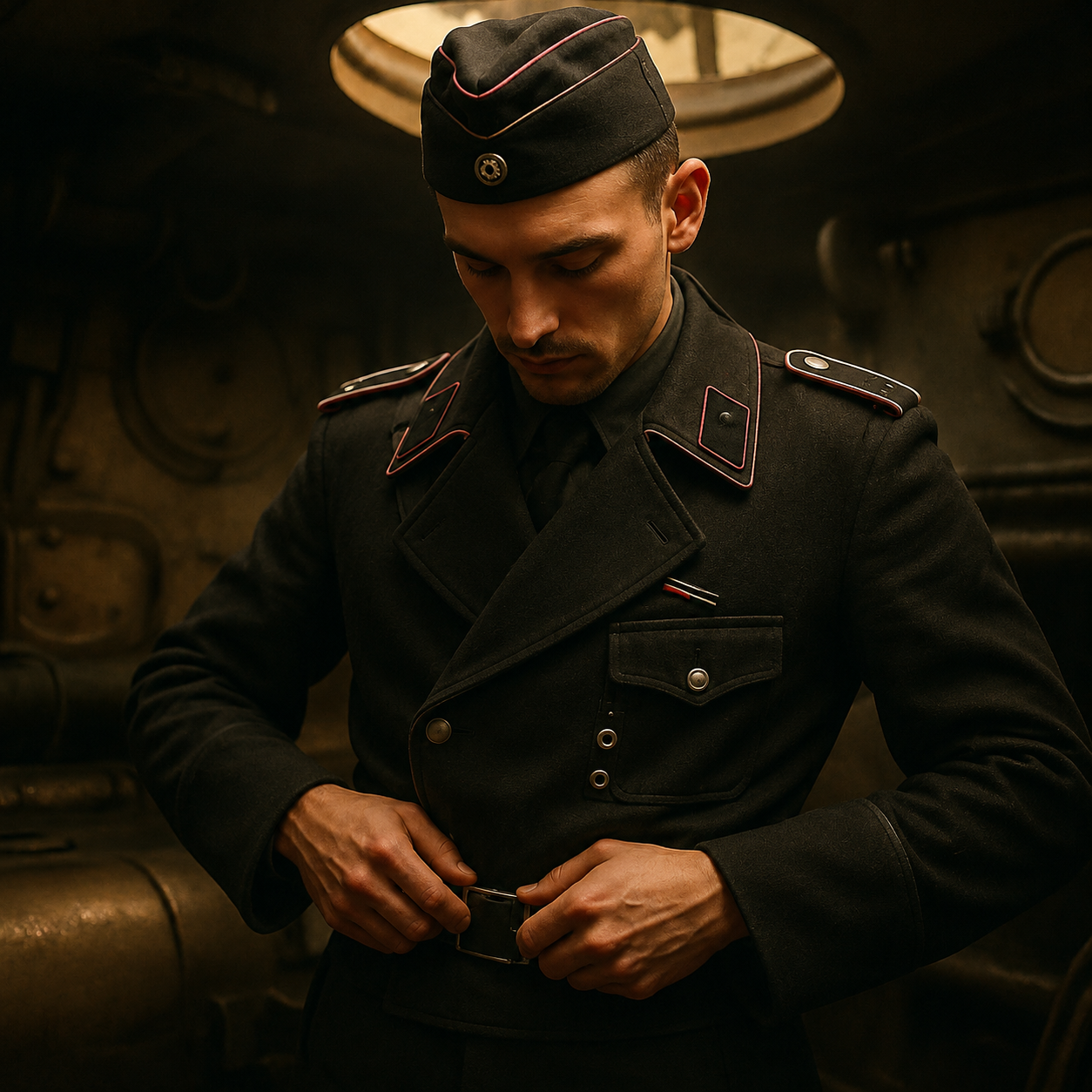
La Panzerwaffe (arma blindada) de la Wehrmacht alemana fue conocida por su imagen impactante y parte de ello se debió al diseño de sus uniformes. Los Panzertruppen o tropas blindadas, vestían uniformes negros ajustados pensados para facilitar el movimiento dentro de los estrechos compartimentos de un tanque. El negro ayudaba también a disimular el hollín y la grasa de los motores.
This uniform was crafted with great attention to detail—not by chance: Hugo Boss was among those responsible for producing military garments in interwar Germany. The result was a recognizable, sober, and distinctly modern aesthetic.
From 1943 onward, necessity began to outweigh strict uniformity: Panzer corps soldiers also wore camouflage uniforms, winter clothing, or mixed gear. Nevertheless, the original black uniform remains one of the most representative and recognizable of the 20th century for its practical design and strong visual impact.
Roman Soldiers: Uniformity in Motion
Mucho antes de los tanques ya existía una forma de uniformidad militar funcional: la del ejército romano. Aunque no todos los soldados vestían exactamente igual —el Imperio era amplio y adaptativo—, sí compartían una estética unificada fácilmente reconocible en cualquier frente del vasto territorio imperial.
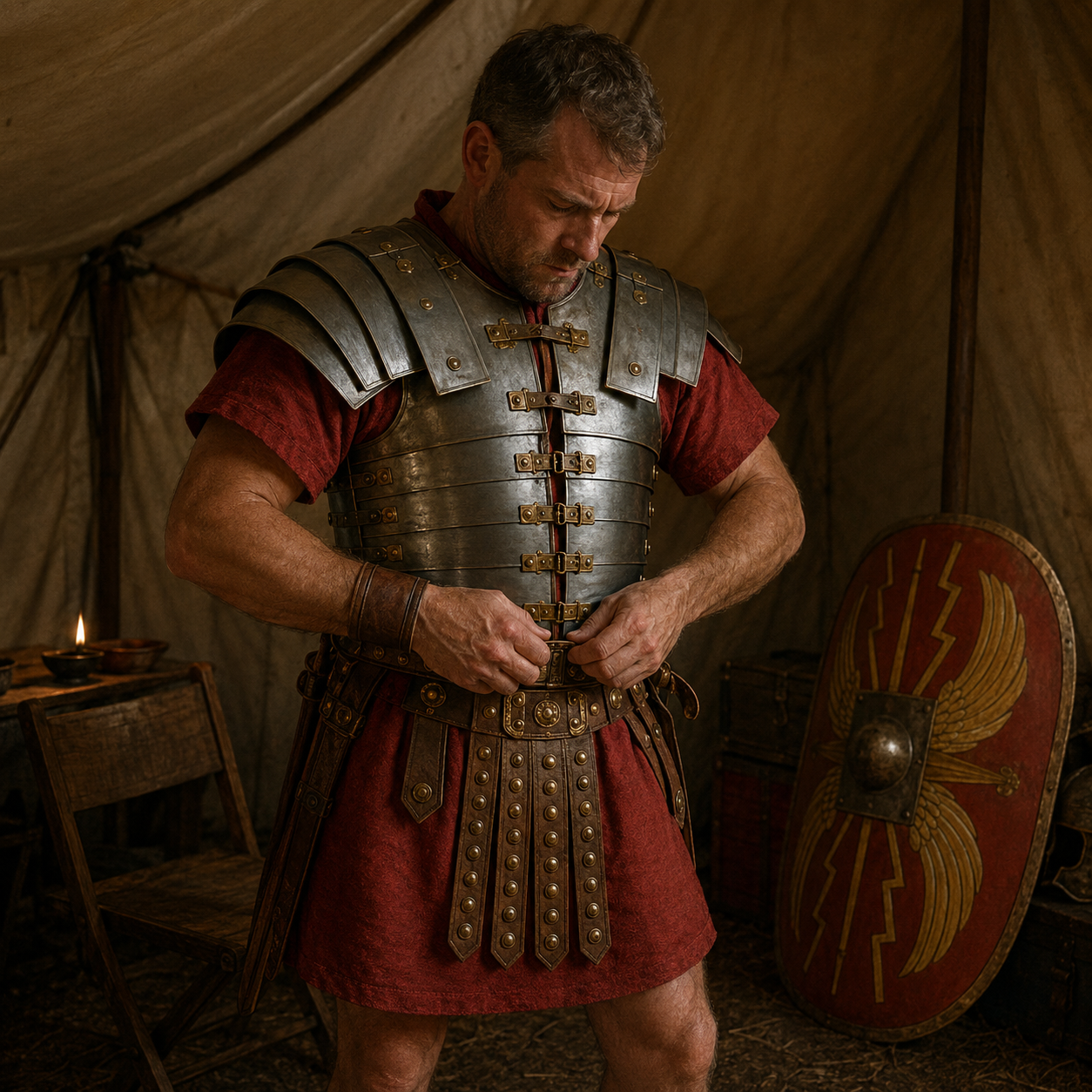
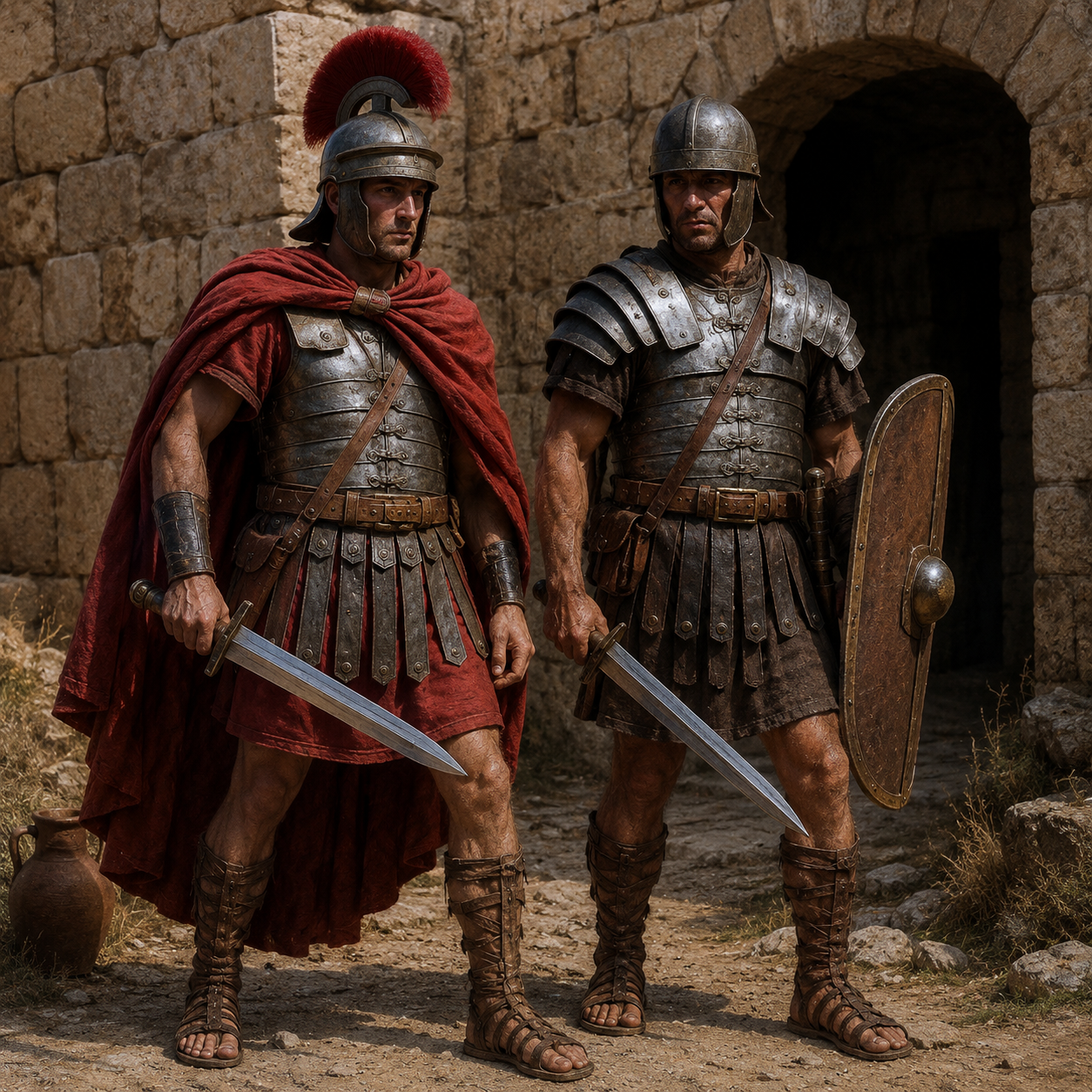
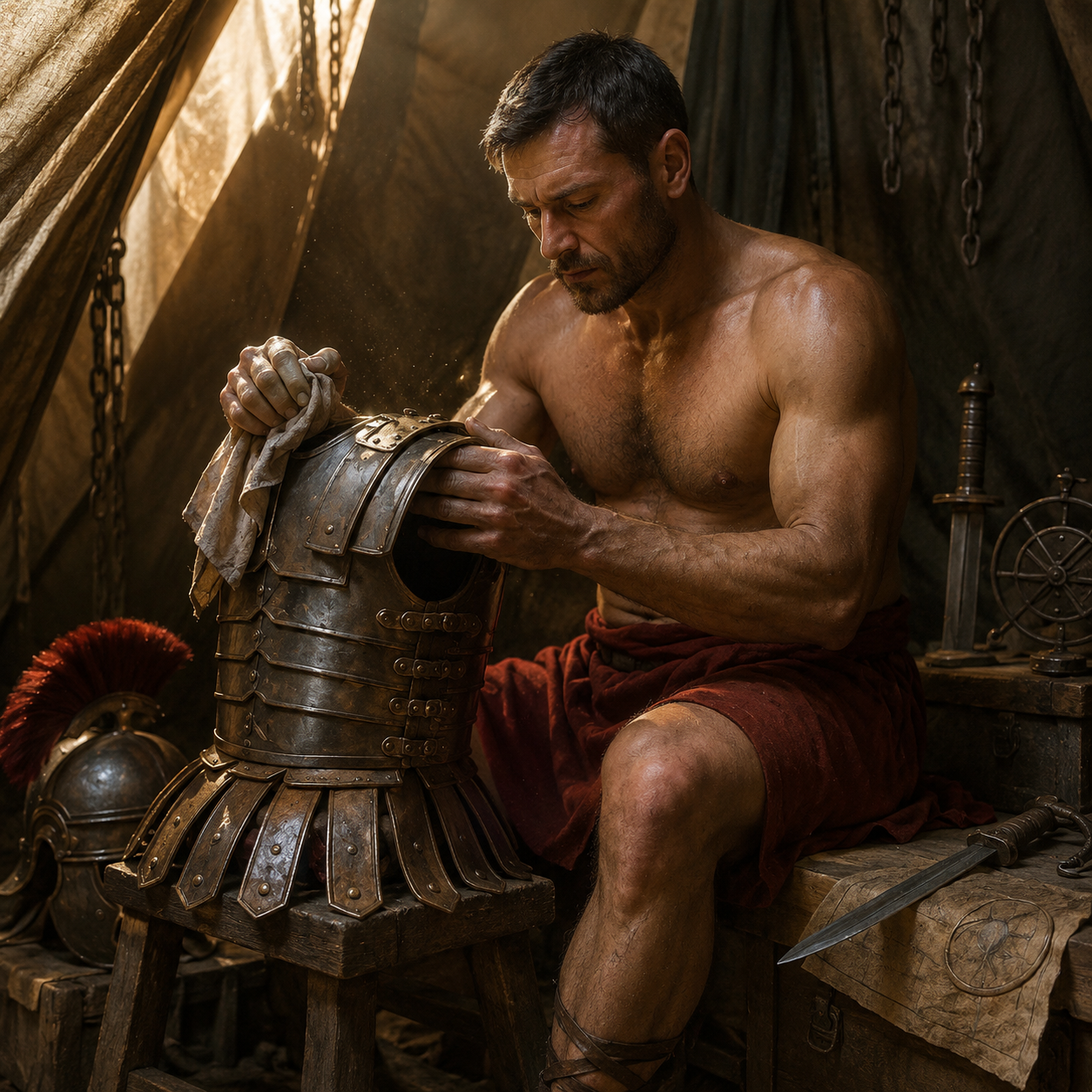
The lorica segmentata, or segmented metal armor, was the central element of the legionary’s gear, worn over a short wool tunic. It was completed with a wide belt (cingulum militare), reinforced sandals (caligae), and in cold weather, a warm cloak known as the sagum.
The helmet (galea), perfected over time, featured a visor, neck guard, and movable cheek pieces during the imperial period. The curved rectangular shield (scutum) bore the distinctive emblems of each legion, serving both as a defensive tool and a marker of identity.
As for colors, red and gold predominated, visually enhancing the impact of the whole. Motifs such as eagles, lightning bolts, and tridents decorated armor and standards, symbolizing strength, divine power, and speed. To highlight hierarchy and visibility in battle, helmet crests served as rank insignia: their orientation—longitudinal or transverse—indicated the soldier’s place within the chain of command.
Broken
Chapter 9
…The supposed prehistoric hunter couple began to show great interest in the clothing, as well as the footwear, of the visitors…

 EN
EN  ES
ES  FR
FR