Roman Clothing

Identidad, estatus y función
Clothing in Ancient Rome reflected social status, gender, and the public or private role of the wearer. Roman citizens, known as gens togata, wore togas as a distinctive sign, while the tunic was the basic garment across all classes, from slaves to nobles.
Men’s clothing
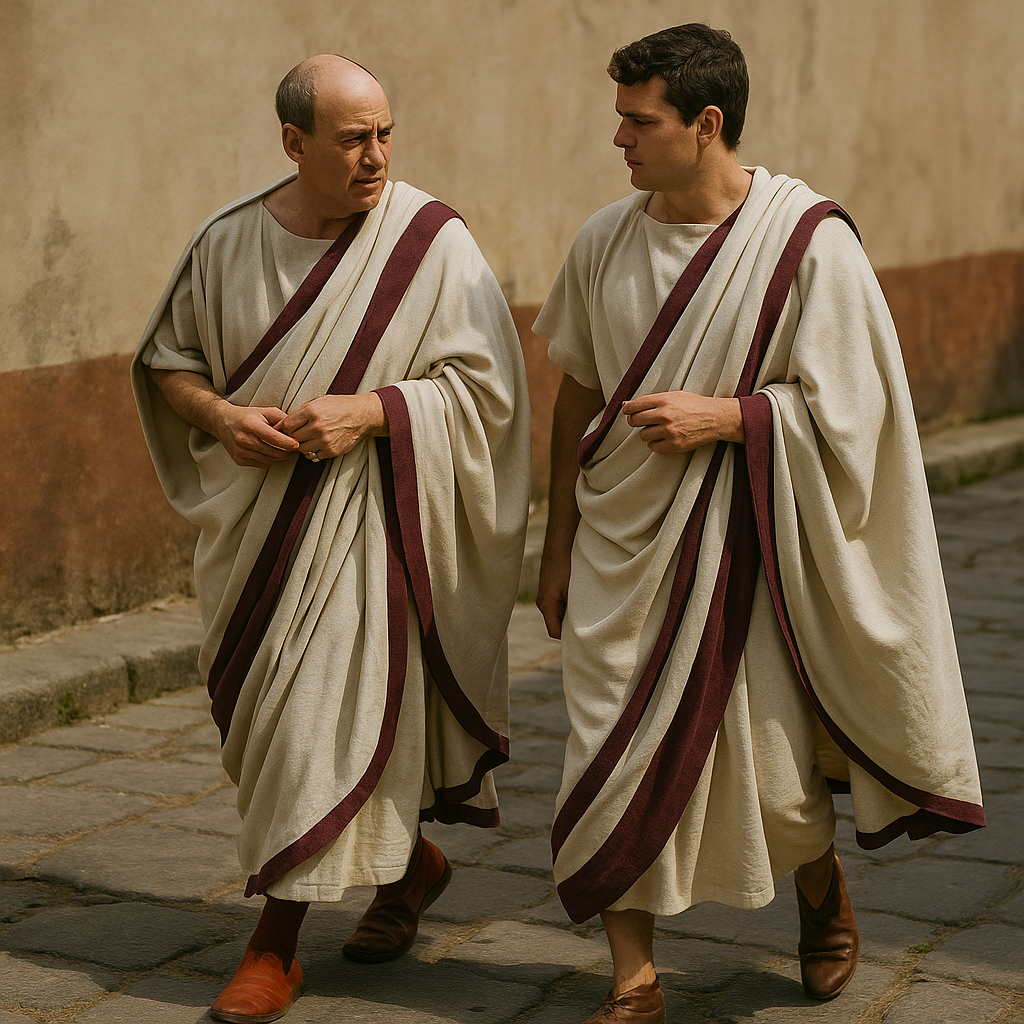
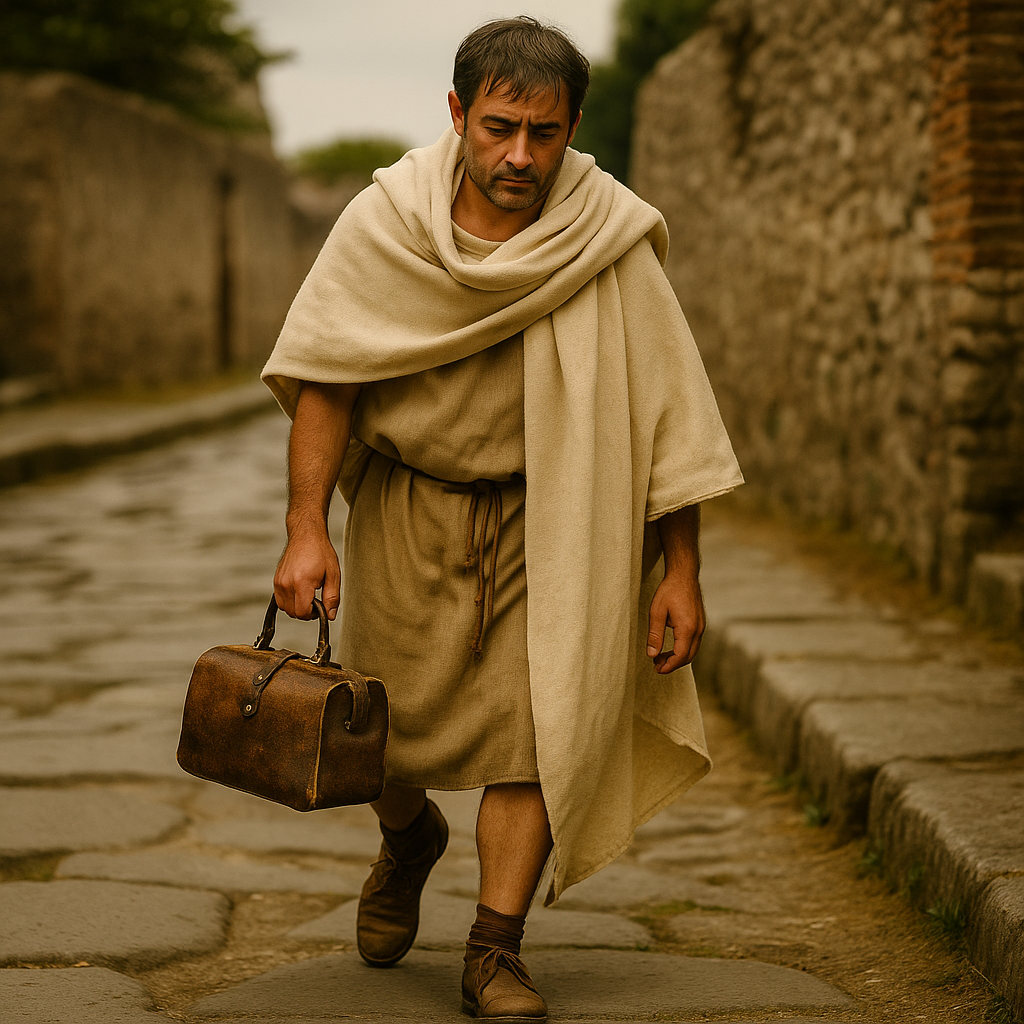
- Tunic: a standard piece, with or without sleeves, sometimes worn with a subucula (undergarment). It was fastened with a belt (cingulum) and worn under the toga.
- Toga: reserved for male citizens and required at public events. Its color varied by rank: white (toga candida) for political candidates, purple-bordered (toga praetexta) for magistrates, and gold-embroidered (toga picta) for emperors or triumphant generals.
- Paenula and lacerna: outer cloaks that gained popularity from the 1st century onward, more practical than the toga and used for protection against the weather.
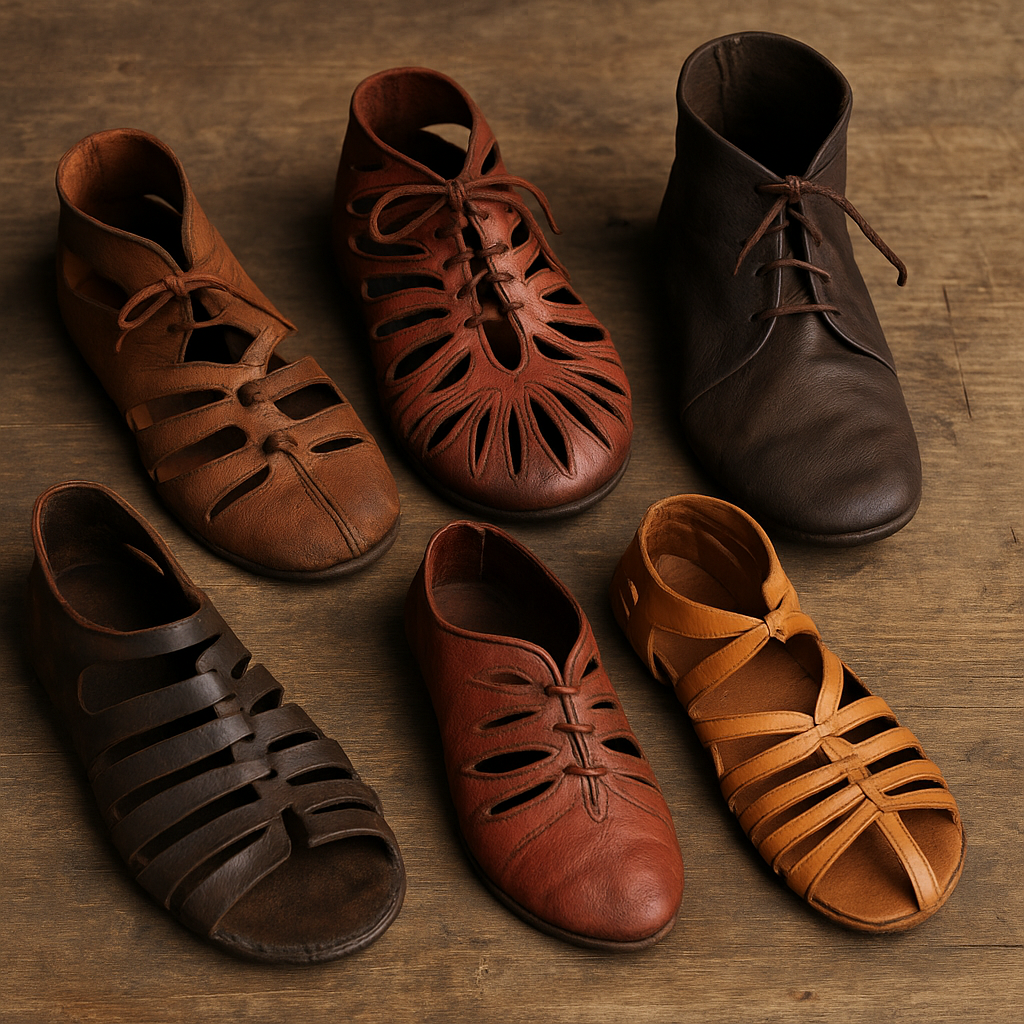
- Footwear: light sandals indoors; sturdier leather shoes for outdoors or soldiers.
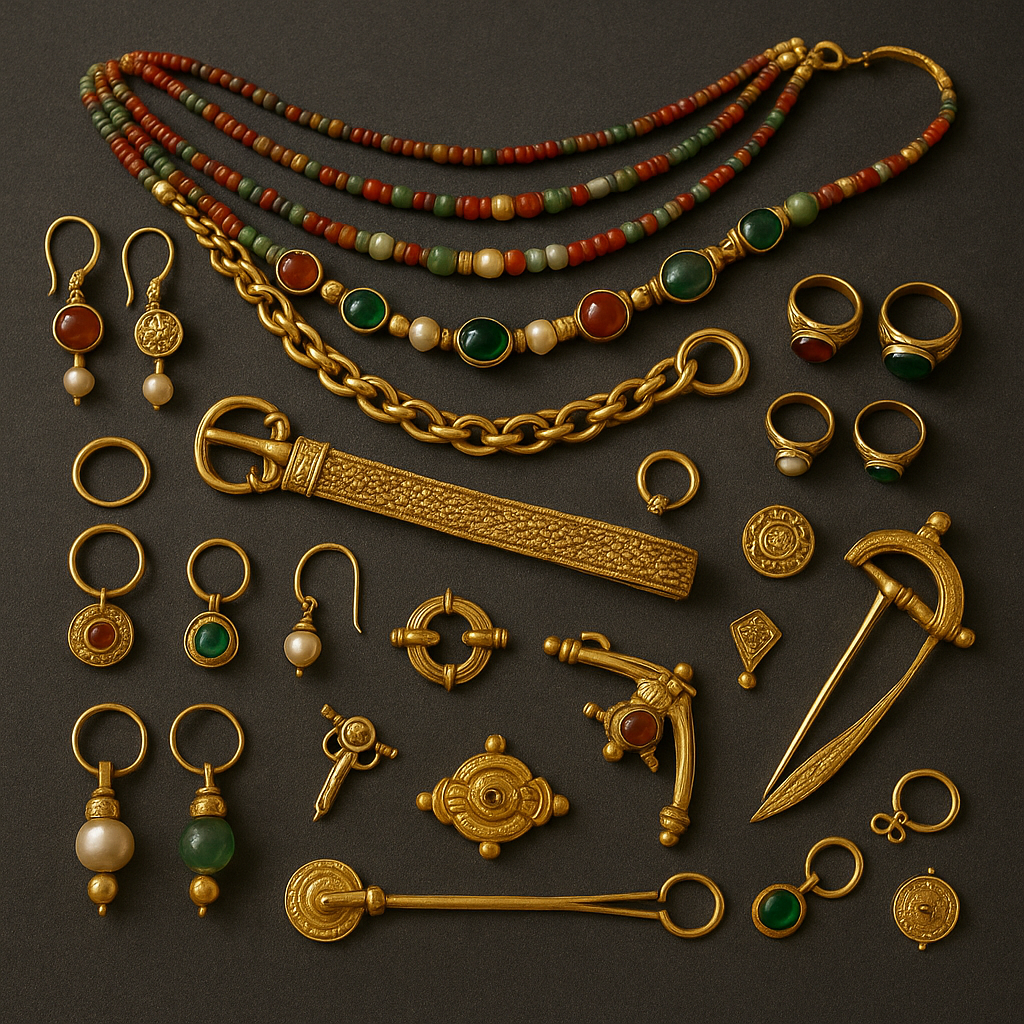
- Jewelry: officially, men wore only one signet ring, although in practice many added more adornments.
- Hairstyles: short hair and a clean shave were the norm until Hadrian, after which the beard returned as a trend.
Women’s clothing
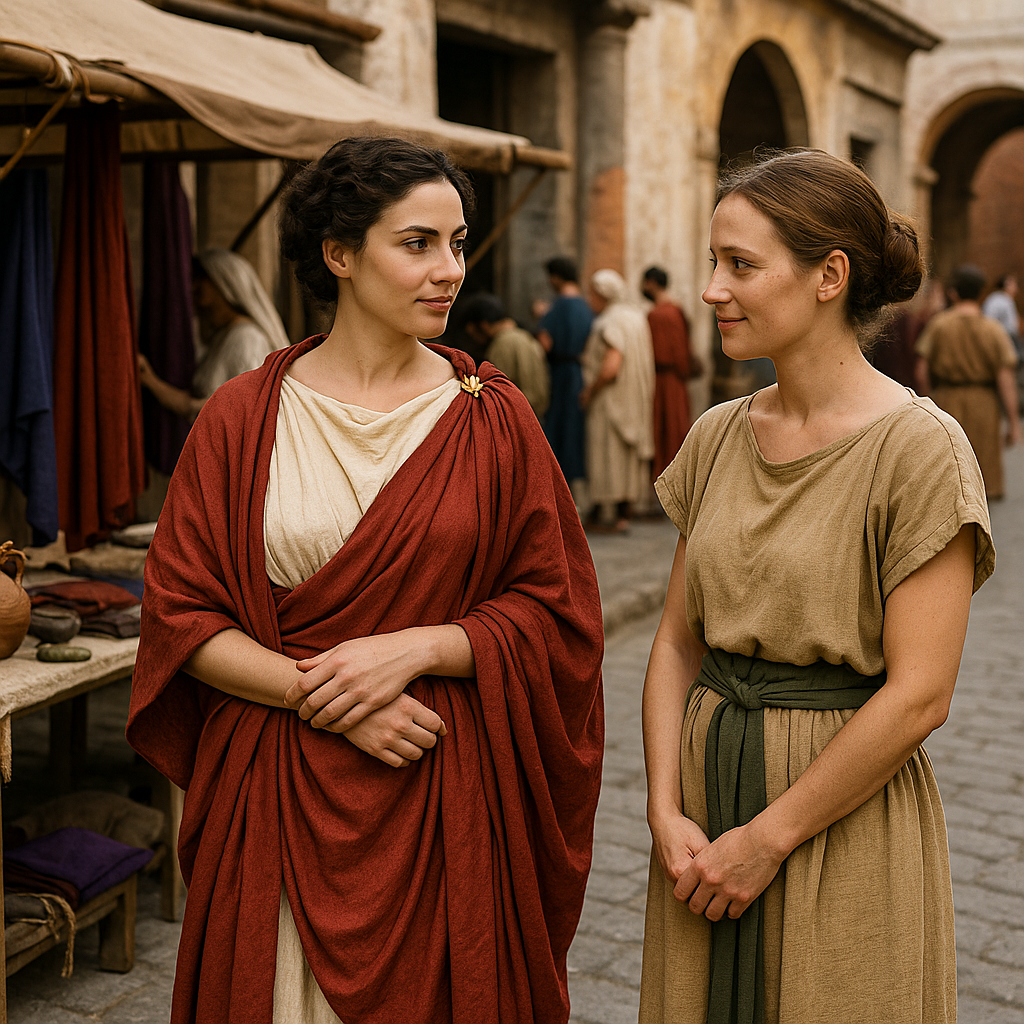
- Tunic: the basic garment, simpler for humble women and more elaborate for upper-class women at home.
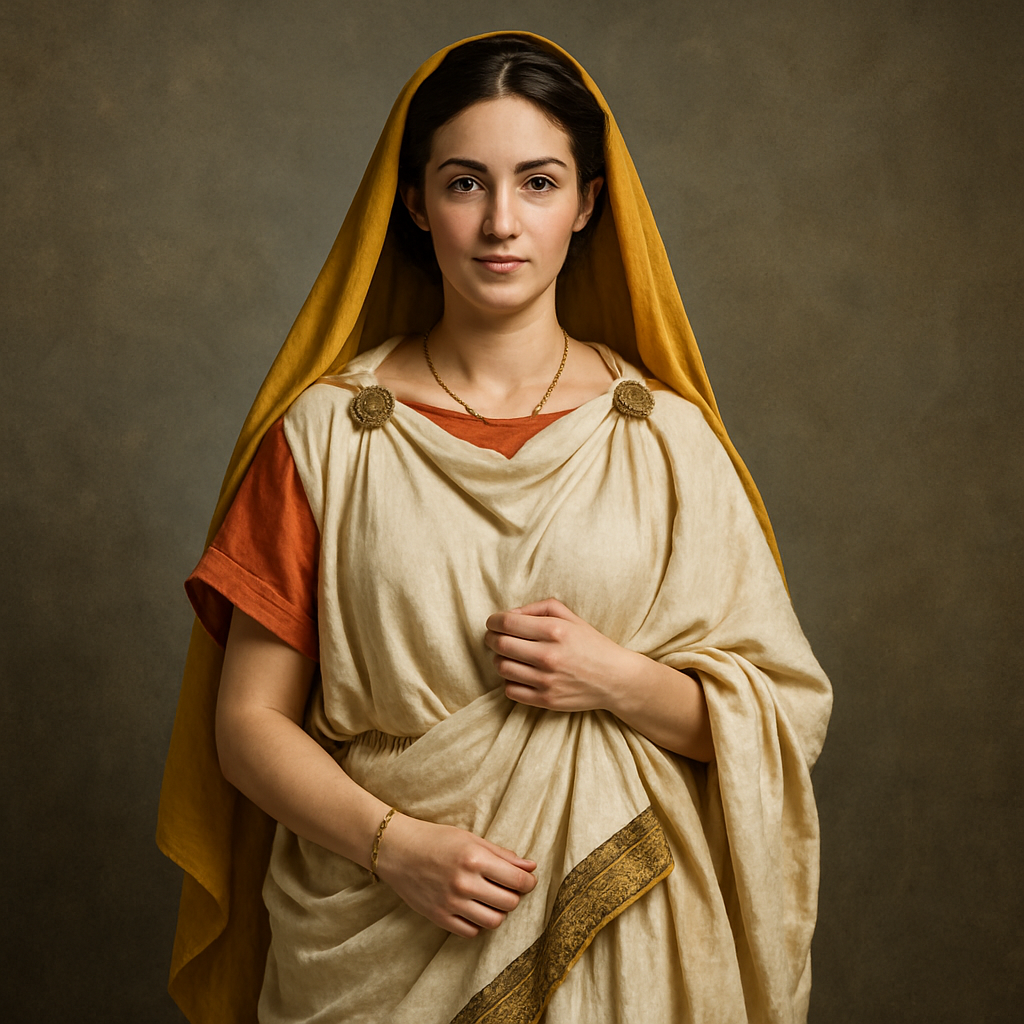
- Stola: a mark of respectability and the status of a married woman, with short sleeves and a decorated hem.
- Palla: a long mantle worn outdoors, similar to a shawl.
- Underwear: like men, women wore the subligaculum, along with the fascia, a band used to support the bust.
- Footwear: structurally similar to men’s, with a preference for more elegant models among wealthy women.
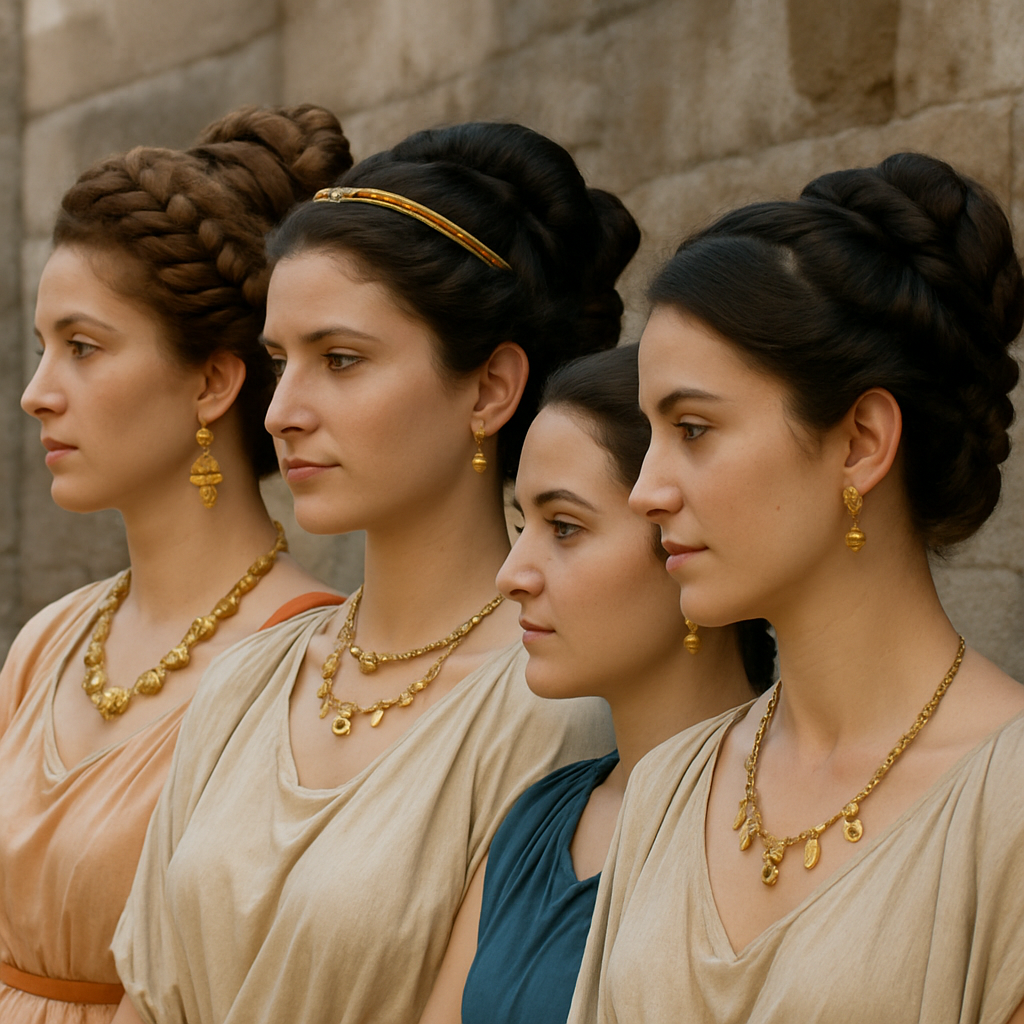
- Jewelry: Roman women loved jewelry, wearing precious stones and varied designs across the body.
- Hairstyles: over time, styles became increasingly elaborate, reflecting fashion, status, and sophistication.
The crossing
Chapter 21
…—That centurion was right, all the clothes I found are rubbish. My soft and delicate skin needs linen or cotton. I tried on one of their horrid shrouds and nearly burst out of it,’ Erich complained, showing a reddened forearm...
Did you know…?
🔹 The dress of the Spaniards during Roman rule was exclusively Roman, until the early Middle Ages when it was slightly altered by the Goths and Byzantines. They usually wore a headdress called the melo.
🔹 The toga weighed between 9 and 18 pounds and required assistance to be worn correctly. Some wealthy citizens hired attendants just to dress them.
🔹 Emperors received pure silk fabrics from China through trade routes such as the Silk Road, though it was considered an almost scandalous luxury.
🔹 Roman women used natural dyes such as henna or cinnabar to color their hair or lips, although excessive use was seen as vulgar.
🔹 Some soldiers inner tunics had the name of their century embroidered on them, serving as identification, similar to modern clothing labels.
Materials and decoration
Clothing was mainly made from homespun wool, although the upper classes had access to imported linen, cotton, or silk. It was decorated with dyed borders, stripes (clavi), and embroidered motifs. The color and width of the clavi also indicated social position.
Over time, many outer garments replaced the toga for comfort, while the variety of tunics and cloaks expanded to suit the climate, profession, or personal style. Through their clothing, Romans not only protected or adorned themselves but also positioned themselves socially within the complex mosaic of the Empire.
How they dressed
In Ancient Rome, clothing was not only functional but also a symbol of status, power, and belonging. Although changes were slow, real fashions existed, set mainly by the elite. Colors, fabrics, hairstyles, and ornaments evolved according to trends promoted by emperors, matrons, or foreign influences.
The use of purple was a reserved privilege, and hairstyles from the imperial court were eagerly copied by wealthy women. Contact with Greece, Egypt, and the East introduced new garments, such as trousers (bracae) or closed cloaks like the paenula, first adopted by soldiers and travelers, later by nobles. Even among the lower classes, imitating the style of the powerful—within their means—was a form of social aspiration.


 EN
EN  ES
ES  FR
FR