Nikolaikirche

Nikolaikirche: witness to centuries of Berlin history
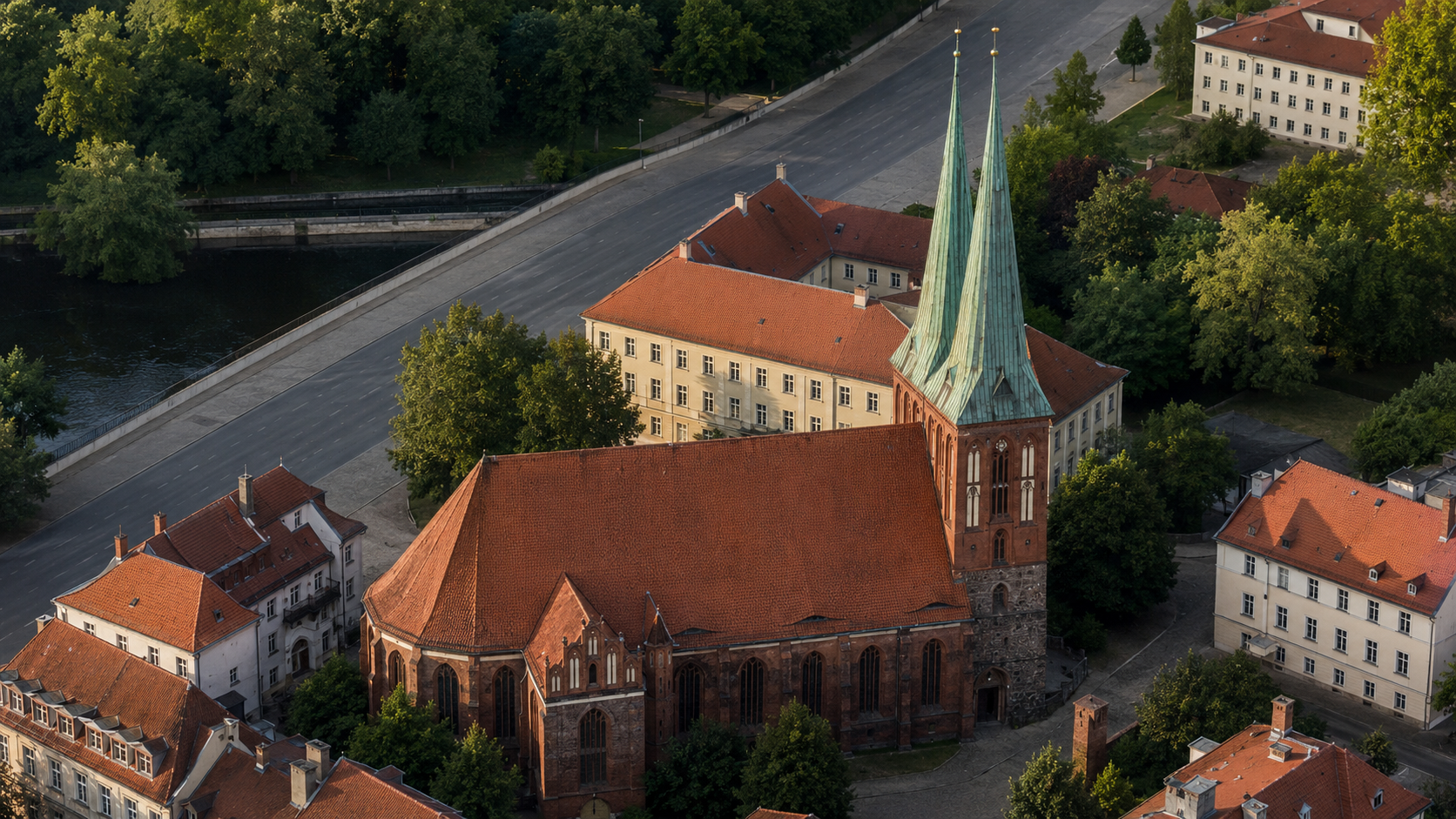
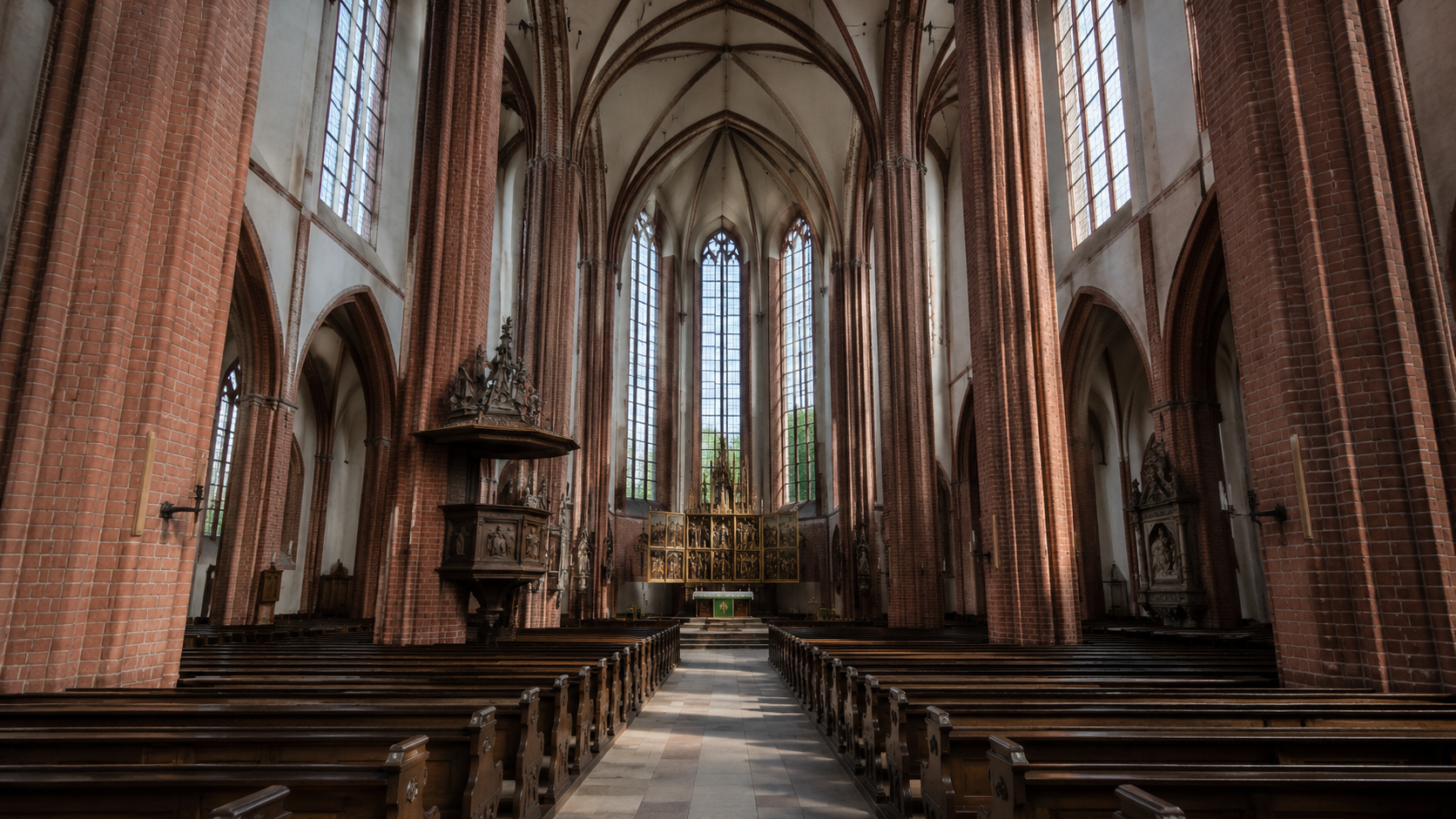
The Nikolaikirche was built around the year 1230, when Berlin did not yet exist as a unified city and the area was divided between the settlements of Berlin and Cölln. It is in fact the oldest surviving building in the city. From its earliest centuries, in addition to its religious function, it served as a place for civic gatherings even before there was a formal town hall. Its architecture and furnishings have reflected throughout the centuries the creative drive and economic power of Berlin’s citizens.
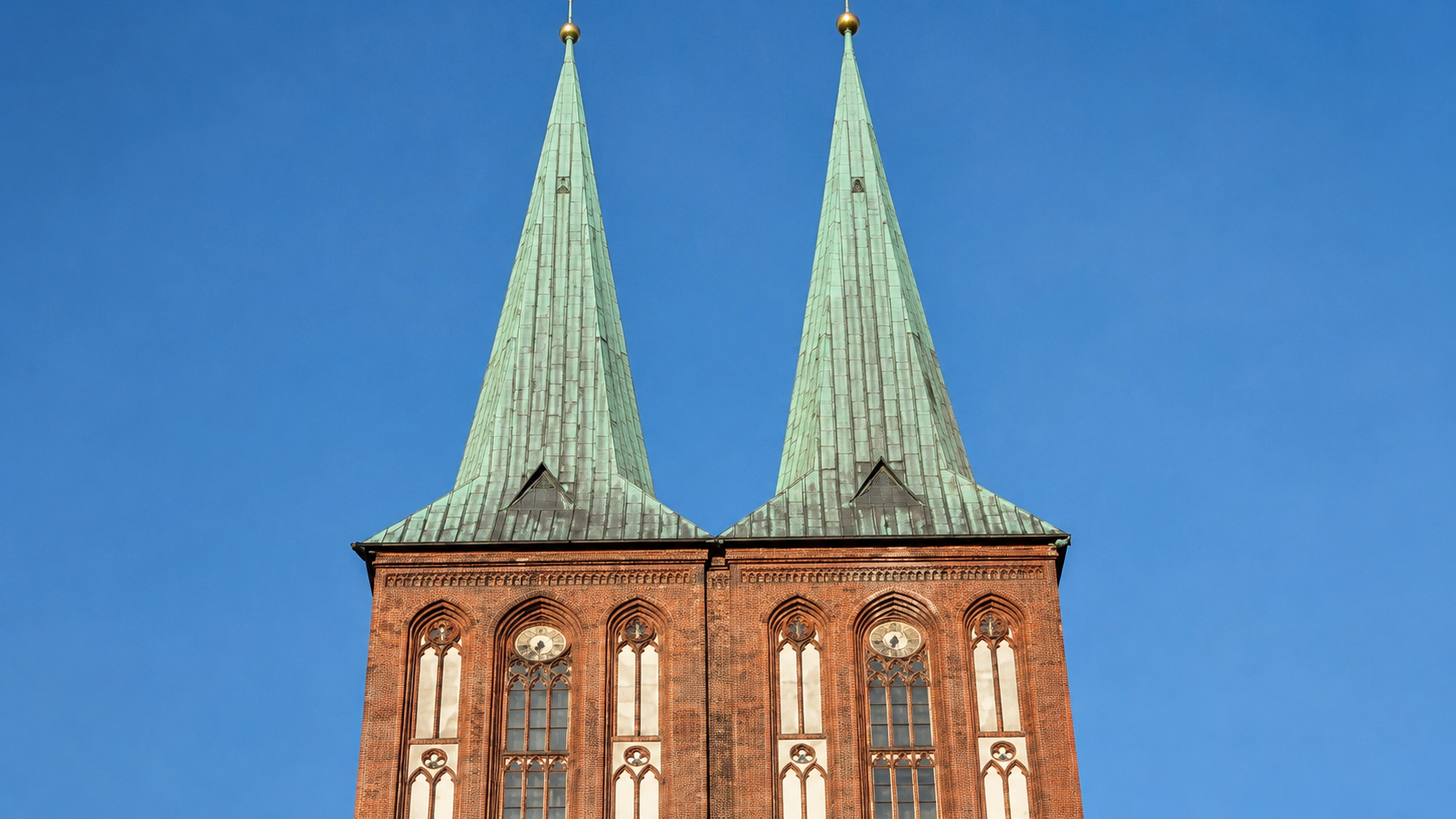
Its distinctive twin towers, added at the end of the 19th century, defined the profile of the city’s historic center for decades.
In 1939, the Nikolaikirche ceased to be used as a place of worship. Five years later, in 1944, it was completely destroyed during the bombings of the Second World War. For decades its ruins remained as a silent testimony of devastation. In those final years, the church also became a discreet meeting point for small resistance groups in Berlin. It was there that figures such as Dr. Walther Henke, later associated with echoes of the White Rose, found in that semi-ruined space a symbol of dignity against the terror of the Reich. Indeed, there was even debate about leaving it unrestored, as a permanent monument against war. However, in the 1980s, with the cultural revival promoted by the GDR, it was decided to rebuild it faithfully as a symbol of the city’s historical identity. The works began in 1984.
In 1987 the Nikolaikirche was reopened as a museum and between 2008 and 2010 it was fully restored with the financial support of the European Union. Since then it has been part of the Stadtmuseum Berlin and is once again open to the public as a historic and cultural space.
Today, the Nikolaikirche once more rises as a restored monument in the heart of the Nikolaiviertel, embodying centuries of Berlin’s history. Beneath its foundations, remains predating the 13th century have been found, including traces of a Slavic settlement, underlining the historical significance of this site long before the official founding of the city.
Saint Nicholas Church
Chapter 2
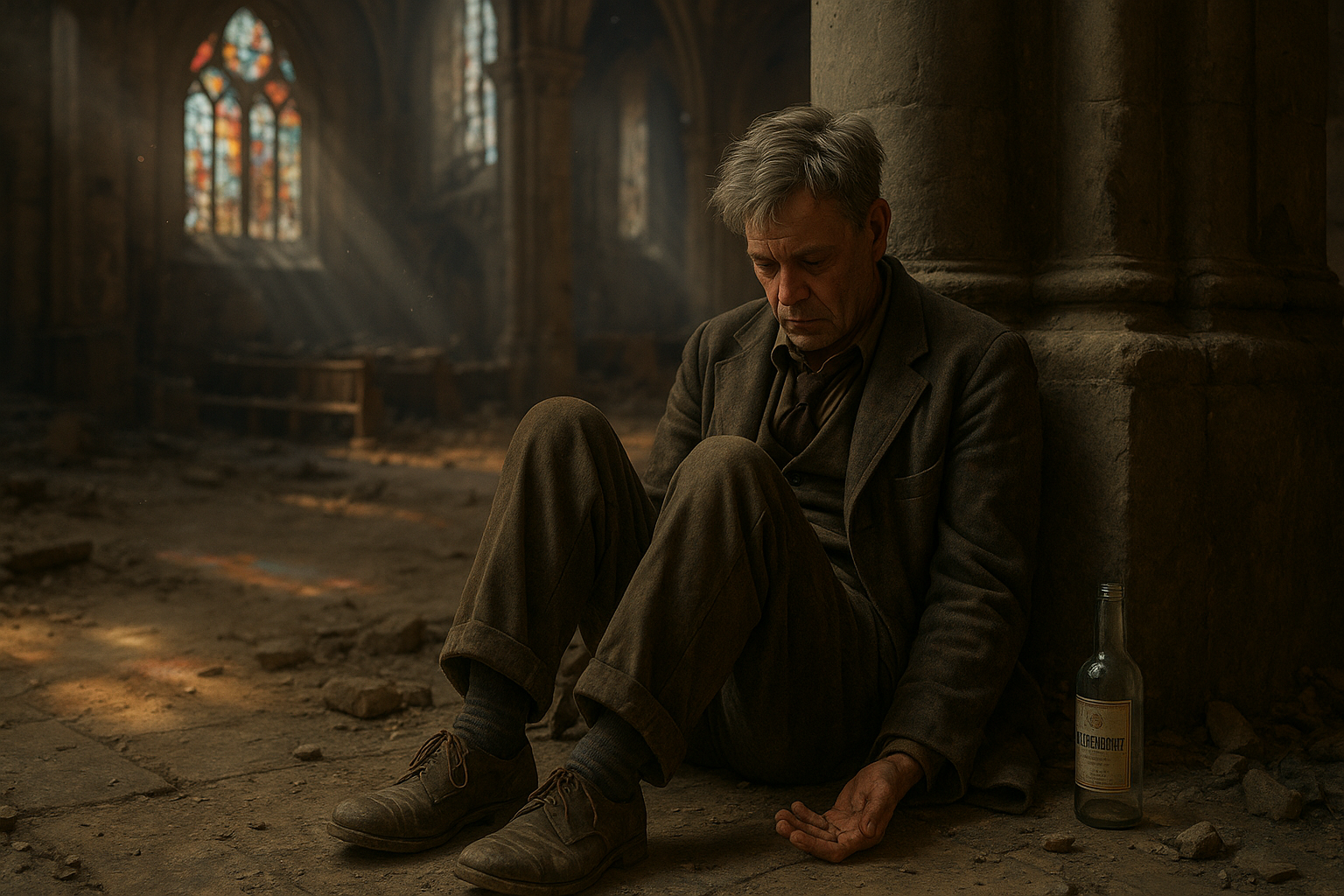
…Dr. Walther Henke was sitting on the ground. He leaned his back against one of the choir columns and kept his legs drawn up to his chest. Beside him lay an empty bottle of Kirschwasser… Kirschwasser…
Did you know…?
🔹 During the excavations prior to its restoration in the 1980s, it was discovered that the Nikolaikirche had housed a medieval pilgrims’ crypt, where religious travelers journeying along the routes of northern Europe were offered refuge. This function complemented its civic role and reinforced its importance as a central point of spiritual and social life in medieval Berlin.
🔹 The Nikolaikirche had a sundial on its southern façade, installed in the 17th century. It was used by local merchants to coordinate their activities before mechanical clocks became widespread.
🔹 In the 18th century, the church was one of the few buildings in Berlin where sermons were offered in French, as part of the city’s welcome to Huguenot refugees. This gesture reflected the relatively tolerant atmosphere of Berlin at the time.

 EN
EN  ES
ES  FR
FR